


Why smart, low-income students aren't applying to elite colleges
Go Deeper.
Create an account or log in to save stories.
Like this?
Thanks for liking this story! We have added it to a list of your favorite stories.


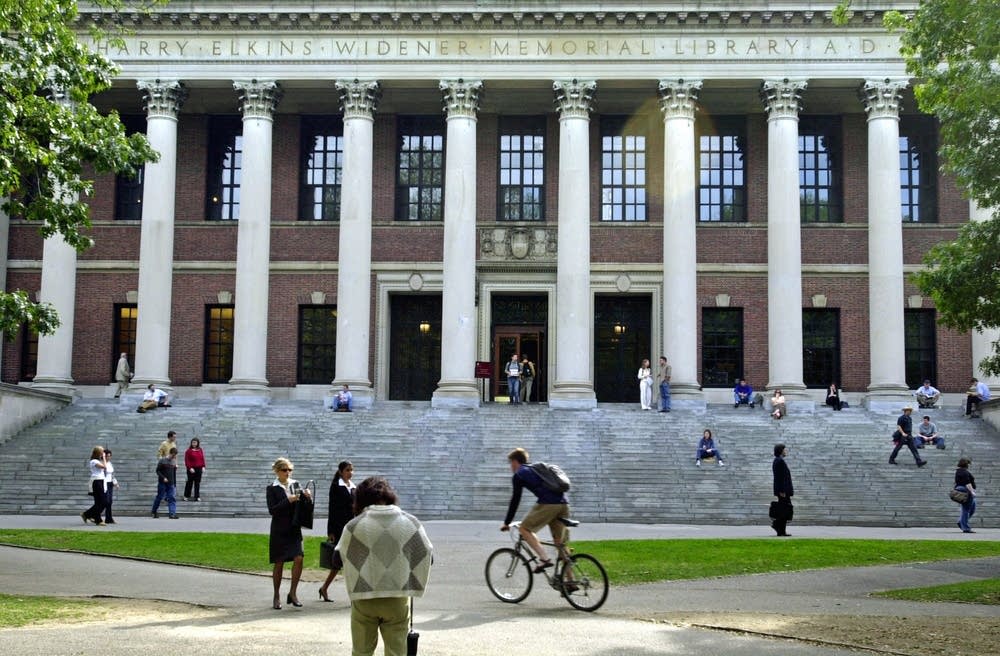
Why aren't high-achieving, low-income students going to elite colleges and universities? Turns out, they're not applying.
According to a recent study from the National Bureau of Economic Research:
The vast majority of very high-achieving students who are low-income do not apply to any selective college or university. This is despite the fact that selective institutions would often cost them less, owing to generous financial aid, than the resource-poor two-year and non-selective four-year institutions to which they actually apply. Moreover, high-achieving, low-income students who do apply to selective institutions are admitted and graduate at high rates.
Turn Up Your Support
MPR News helps you turn down the noise and build shared understanding. Turn up your support for this public resource and keep trusted journalism accessible to all.
Christopher Avery, one of the authors of this study, and Derek Thompson, who wrote about it for The Atlantic, join The Daily Circuit Monday, Feb. 4 to discuss the findings.
LEARN MORE ABOUT ELITE INSTITUTIONS AND LOW-INCOME STUDENTS:
Elite Colleges Struggle To Recruit Smart, Low-Income Kids (NPR)
Why Smart Poor Students Don't Apply to Selective Colleges (and How to Fix It) (Derek Thompson for The Atlantic)
For Poor, Leap to College Often Ends in a Hard Fall (NY Times)
The Effects of College Counseling on High-Achieving, Low-Income Students (Study from Christopher Avery)
The Economic Implications of Not Cultivating Our Top Low-Income Students (National Journal)

Dear reader,
Your voice matters. And we want to hear it.
Will you help shape the future of Minnesota Public Radio by taking our short Listener Survey?
It only takes a few minutes, and your input helps us serve you better—whether it’s news, culture, or the conversations that matter most to Minnesotans.


