Commentary
How to stop languishing and get yourself adopted
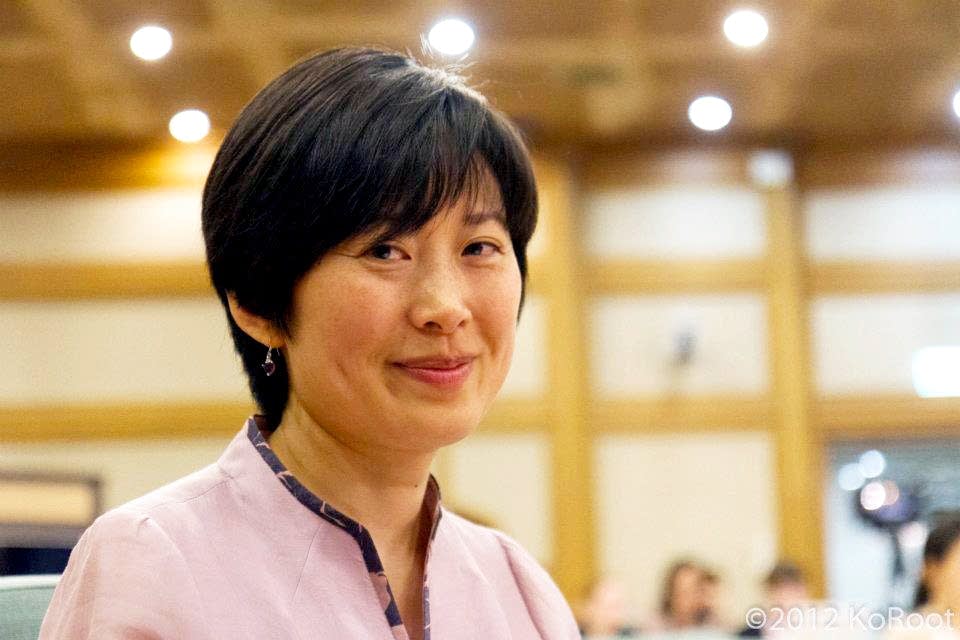
By Jane Jeong Trenka
Jane Jeong Trenka was adopted from Korea to Minnesota in 1972. She is author of the memoirs "The Language of Blood" and "Fugitive Visions," and coeditor of the anthology "Outsiders Within: Writing on Transracial Adoption." She is studying for a master's degree in public policy at Seoul National University and is president of TRACK (Truth and Reconciliation for the Adoption Community of Korea).
Hey, kids in foster care. You might be wondering why Americans are raising a stink about Russia banning adoptions while you are still waiting for a family. You might feel like no one wants you.
And why wouldn't you feel that way?
There are 58,000 of you living in institutions, 104,236 eligible for adoption and 400,540 in foster care. But I can recommend some ways to make yourself as precious and loveable as one of those Russian orphans. Take some tips from an international adoptee! Here's how:
1. Be young. You have no value if you are older than 5. I know — you're 12. But maybe people won't notice if you act young. They'll think you're big for your age. If you expect to be adopted as a preteen, forget it. At that point, all you are is a looming college tuition bill.
2. Be white. That's what the Russians had going for them. But if you can't do that, you can at least not ask to be adopted into a family that speaks Spanish or Laotian or whatever it is you used to speak at home. Language classes are once a week, and culture camp is once a year. Don't confuse tourism with real life. Got it?
3. Be alone. Nobody wants a band of kids that is already a family unit. They are trying to integrate you into them, not be integrated into you. So why are you telling people you have not just one — but two or three siblings? Say goodbye to them and send the youngest ones off to fend for themselves. They probably won't even remember you later. Maybe you can find them in adulthood through Facebook if you're sentimental.
4. Be an orphan. Do you really expect to be adopted you if want to maintain ties with your birth family? People fear your mother showing up at their front door. That is why they like to adopt kids from as far away as possible! "I am a poor orphan. I am a poor orphan." That is your new mantra, and do stop talking about your mother. Not only should you obliterate your memory, but you should also ask your social worker to burn any records that suggest you may have difficulty making adults feel loved and needed in exchange for a home.
Adoption is not about what you want. It's about what adopters want. Get it straight, kids!
Comments (16)
I don't disagree with all of the points but I do wonder why it has to be presented with such bitterness. Some of the points are just true and have nothing to do with adopting families/parents being bad people and this is how she makes it sound- as if adopting people are terrible human beings. It is just harder to clothe and feed 4 kids instead of 1, for example. It isn't about what adopters "want" necessarily, it may have to do with what they can do financially, emotionally and timewise. I just wish that some of these articles could present perspective without the sarcasm and open up real dialogue about the difficulties of domestic adoption, foster care and children in the system without perpetual villainization of the adopting families.
Everything she said is true but it's more nuanced of course. Our family adopted internationally and we have kept some limited connection with the birth family but it is difficult. No one places their child for adoption for the fun of it, so there is always some painful reason that the family couldn't care for their child. Keeping a connection with a birth family needs to be done in a way that is healthy for the child and that's not always easy to do. Also, adopting sibling groups is complicated because families may already have children in the family who then become the odd ones out. Our agency recommended against a large sibling group for this reason.
Jane - You nailed it. Kudos! Brava!
I had three out of four, I wasn't orphaned. They waited till I stopped crying, then I was out the door with the next couple who showed up.
Bitter? I always wonder why everyone expects adoptees to be ecstatic about adoption. We've only lost everyone in our entire family and our heritage is ripped away. It's actually NOTHING to do with where we ended up, it's that we have lost everything we had. Adoption is the only trauma where the victims are expected to be grateful.
Adoption (in the vast majority of cases) is a selfish act on the part of the adopting parents. We WANT to add children to our family. If all we wanted to do was help orphans, we'd take that $25K per child and send it to Vietnam or China a US charity. I adopted 4 "special needs" kids internationally (China), and I freely admit that it was selfish. I adopted kids who were all around age 4 at adoption because I WANTED the experience of parenting a younger child. I adopted single children rather than sibling groups because it was what I felt capable of handling emotionally and financially. However I also wanted to adopt kids who genuinely needed families. My son was born without arms; not a long line of people waiting to sign up for those kinds of special needs. I felt like I could handle it, but not everyone would. People do what they feel capable of. When people tell me that my kids are "lucky," I tell them that, no, I am lucky. My kids were born with severe disabilities, were abandoned by their birth families, raised in institutions for 4 years, lost everyone they ever loved including their birth language and culture. Not lucky. But are they better off being adopted, even internationally? Hell yes. What kind of life would my son have in China, as an armless orphan? Here he can be anything. Our agency advised that it was hard to find single children of that age group in US foster care, and perhaps that was wrong. But one less parentless child in the world is one less.
J E from Minn,
The adoption system/industry as it's now practiced is fundamentally flawed and unethical. It doesn't put the rights and needs of the children first. Those are the people who need to have their rights and needs protected. Adoptive parents do not have an automatic right to parent someone else's child just because they want that particular child. Yes, that adult might have fallen in love with that child, but that still doesn't give him/her the right to parent that child. Adoption is about the children, but that's hardly heard. The US, the biggest adopting country, is the only country to NOT ratify the UN Convention on the Rights of the Child.
You obviously haven't spoken with many adoptive parents, adoption agencies, or adoption policy makers about adoption reform, adoptee rights, original birth certificates, first families, ethical adoption, kidnappings, profiteering, corruption, systematic suppression of adoptee and first family representation in adoption policies, federal immigration policies that separate first families, the stolen generations/ illegal adoption practices in Australia, the US, Spain, Ireland, the US, Guatemala, Romania, Vietnam, Cambodia, etc. Shall I continue??
Those conversations don't just fall on deaf ears, they fall on defensive ears.
J E from Minn,
The adoption system/industry as it's now practiced is fundamentally flawed and unethical. It doesn't put the rights and needs of the children first. Those are the people who need to have their rights and needs protected. Adoptive parents don't have an automatic right to parent someone else's child just because they want that particular child. Yes, that adult might have fallen in love with that child, but that still doesn't give him/her the right to parent that child. Adoption is about the children, but that's hardly heard. The US, the biggest adopting country, is the only country to NOT ratify the UN Convention on the Rights of the Child.
You obviously haven't spoken with many adoptive parents, adoption agencies, or adoption policy makers about adoption reform, adoptee rights, original birth certificates, citizenship, deportation, identity, first families, ethical adoption, kidnappings, profiteering, corruption, systematic suppression of adoptee and first family representation in adoption policies, federal immigration policies that separate first families, the stolen generations/ illegal adoption practices in Australia, the US, Spain, Ireland, the US, Guatemala, Romania, Vietnam, Cambodia, etc. Shall I continue??
Those conversations don't just fall on deaf ears, they fall on defensive ears in the adoption community.
THANK YOU. Thank you for telling it like it is, Jane.
And thank you, Scott K, for your comment.
Hmmmm what Jane says is true I think. It really sucks to be a foster kid. I wish that every single one of those waiting kids got a home with loving parents. My first daughter was adopted at age 11 - she was described as white but she wasn't. Her dad was from Puerto Rico and her mom was from the Seneca Reservation - yet when we adopted her she was French and English - go figure. My daughter who is now 48 would tell you that getting adopted was like winning the lottery. She really believes that. She was in 17 foster homes before she was 5 then she was in a home for children - a horrible institution that stripped the kids of any individuality. I love my oldest daughter with all my heart so please don't think that I ever for even a minute regret the decision to adopt. I learned more from her about parenting than from anyone else and I am extraordinarily proud of her. However - there is a huge difference between adopting an 11 year old with multiple issues and adopting a 3 year old and a baby from Korea. The parenting part is totally different. Adopting an older child is tough and the rewards take decades to reap in my experience. Totally worth it!!! But if you want to experience parenthood as we daydream about it - maybe the older child adoption isn't for you. So I did it both ways and in my experience it was more rewarding for me for me to adopt from Korea. That does not negate the experience of adopting an older child domestically but, on a selfish level the adoption of the other two was really more about me and making my own dreams of motherhood come true. Nothing to be proud of in that statement I know but I just want to say that from my experience it is 2 totally different adoption worlds. I am not even sure that the 2 experiences can be compared. Maggie
I am disappointed MPR gave space for this commentary. I have a great deal of respect for the quality material MPR has presented in the past. There are plenty of blogs, websites, and listings that one can go to find incendiary material. This offers neither credible, nor real solutions to a very complex issue both internationally and domestically. As an international adoptee, the continual argument of "us vs. them" presented in such a devisive and debase context fails to honor or respect members within the adoption, foster care, or the international child welfare community (this includes all members of the triad). Anecdotal perspectives should not be mistaken for things appearing to be true.
I would guess that I agree with Jane's underlying premise, which is that the age and race bias in adoption is a tragedy. But I feel like this could have been commincated in a way that wasn't shaming and insulting to foster kids in this situation. It would be nice to talk about how to effect real change instead of heaping more stigma (even in hyerpbole) onto waiting foster kids. How discouraging this must be for a foster kid to read - someone offering no solutions, only shame.
I also think there is much more to it than prospective adoptive parents being inherently selfish. Having adopted a child from foster care, I can attest that it is extremely difficult and emotional. Adopting this way means you live in serious ambiguity, sometimes for years. It took us 3 years to finalize the adoption of our son. I would do it again in a heartbeat, but it was excruciating as we bonded with a child who only knew us as parents, and yet had to deal with the idea that he could be returned to a family that had abused and neglected him. This is the reality for most adoptive parents who go this route. I had planned to adopt numerous children from foster care but after one experience, we decided on international adoption for our next child . Not because we are selfish, but because the process of foster-adoption had been so traumatizing for us. I desperately want more people to adopt foster children but we can't pretend that there aren't major issues in the process that deter would-be parents
I truly hope that no child in the US Foster system reads this hyperbole of an essay. What Ms. Trenka fails to understand about children in foreign countries have much less of a support system in place to help them to adulthood. Yes, it is true that being in ANY system is not ideal. However, the statistics on what happens to children in third world countries after they age out of care is deplorable. This is one of the reasons we choose to adopt internationally. Our sons were almost 4 and 10 and were biological brothers. They were siblings #1 and #4, their brother and sister did not survive their birth home. My older son was present at the time of his sister’s death at age 4, he remembers her. He also remembers the extreme poverty and neglect in his birth home. Their birth father is dead; I have the Russian death certificate. Their birth mother could not be located, was an alcoholic and had Hepatitis B. They spent three years in orphanages, and finally were reunited about 8 months before they came home. Why is this relevant? Because these boys needed a family, and no one in Russian showed an interest in them, EVER. Our younger son was in the 3% for height and weight upon coming home, now he is in a very healthy 45% range. Huge gains for him! Oh, he can also hear now because we had his hearing tested and eventually had surgery to correct the problem.
Have we done hard work with both, as they are considered older adoptees? Resounding yes!
Think you'll find JE it's called irony!
It contains truth and facts sadly.
I find it sad that so many people seem to have difficulty in seeing that far from denigrating fosterees, this article instead explains accurately the problems that they are faced with.
Of course, there are always going to those who confuse honest descriptions with emotion.
We're stronger together. When we can get people to see how the myths ruin our lives, then we can improve it for those who are, sadly, inevitably going to follow because there are always going to be some kids who need raising outside their immediate families.
Thank you Jane, as always your writing is thought provoking and hits the nail on the head. Please continue to shine the light on the realities of adoption. We adoptees need to be heard. We could not articulate these feelings of being a commodity and being used when we were children but we can speak now, and if other people find it unpalatable so be it. I wish you, and TRACK all the success in the world.
Jane,
As long as there are adoptees writing, there will be AP's to come along to say how and what should have been said instead. I am grateful to those adoptees who keep writing.
Post a comment
Please be civil, brief and relevant.
E-mail addresses are never displayed but they are required to confirm your comments. All comments are moderated. MPR reserves the right to edit any comments on this site and to read them on the air with attribution. Please read the Terms and Conditions before posting.
You must be 13 or over to submit information to Minnesota Public Radio. The information entered into this form will not be used to send unsolicited e-mail and will not be sold to a third party. For more information see Terms and Conditions and Privacy Policy.