


Oliver Sacks' 4 facts about hallucinations
Go Deeper.
Create an account or log in to save stories.
Like this?
Thanks for liking this story! We have added it to a list of your favorite stories.


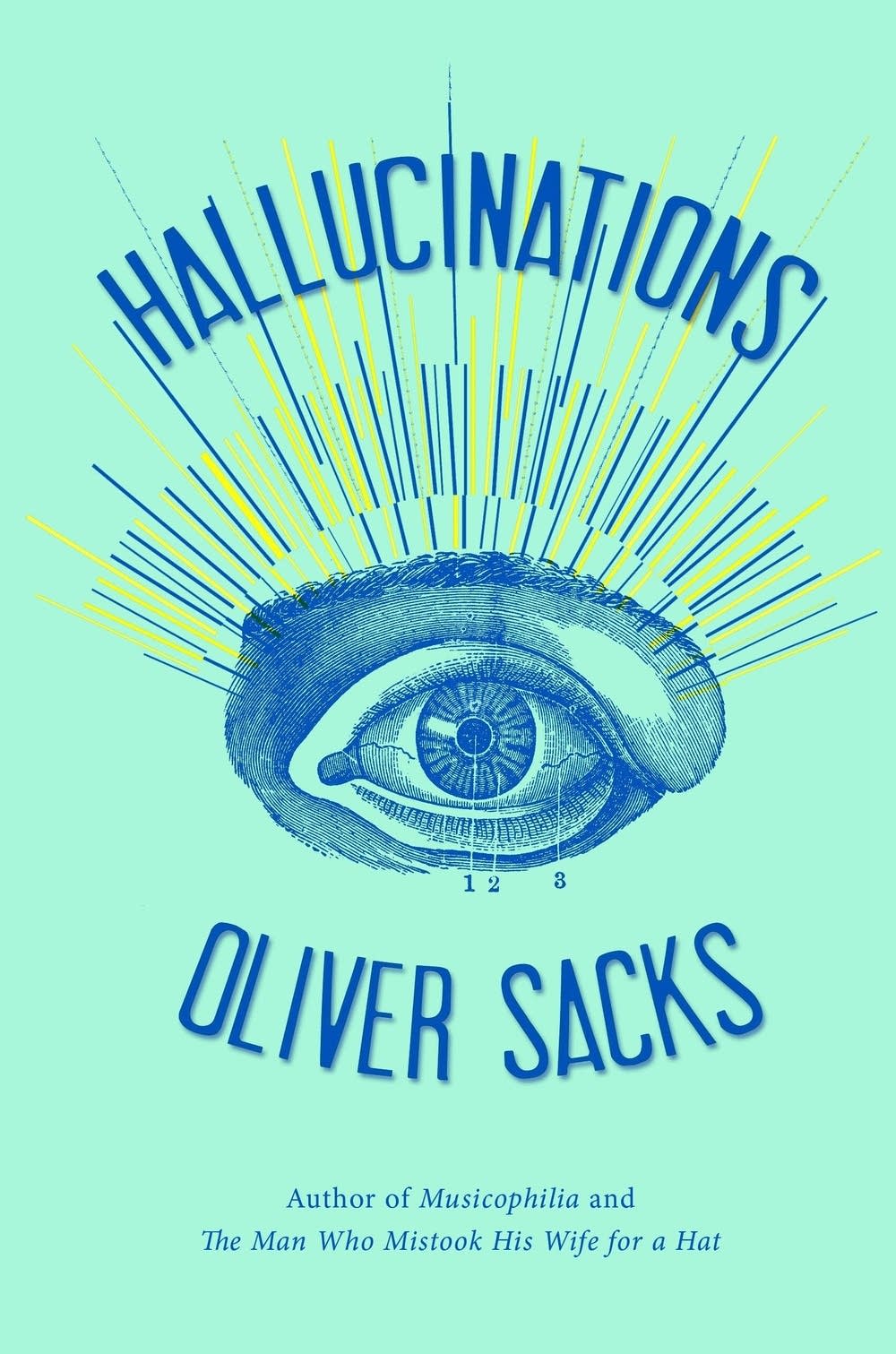
Oliver Sacks is out to remove some of the stigma attached to people who see and hear things that aren't there.
"Hallucinations are not like imagination," Sacks told the Los Angeles Times. "There are many sorts of hallucinations, and one shouldn't be afraid of mentioning that one has them."
Sacks, physician and professor of neurology at the New York University School of Medicine, is out with a new book, "Hallucinations." He joined The Daily Circuit Dec. 10.
A hallucination is a perception that something is there when nothing is there, Sacks said on The Daily Circuit.
Turn Up Your Support
MPR News helps you turn down the noise and build shared understanding. Turn up your support for this public resource and keep trusted journalism accessible to all.
"These forced perceptions seem so real because they hijack or deploy the parts of the brain which are used for real perceptions," he said. "A hallucination tends to occur suddenly. They're involuntary, we don't order them, they suddenly force themselves on our consciousness, they seem to be out there in the real world and it's very confounding to see, or hear or smell something that no one else does."
4 FACTS ABOUT HALLUCINATIONS
1. You can hallucinate through all five senses
People who have an impaired sense will sometimes hallucinate through that sense. For example, blind people have visual hallucinations and deaf people hallucinate sounds and music.
"The brain has to keep active, it has to keep going and if it's not being fed through the senses, the eyes and ears and nose, it will dip into the brain and come up with something," Sacks said.
2. Night driving can cause hallucinations
"The brain isn't getting enough information if there's visual loss and it's just not functioning right if one is exhausted," Sacks said.
3. Migraine auras are simple hallucinations
Before some migraine headache sufferers feel the pain, some experience auras, such as colors and bands and patterns. People with epilepsy can have similar experiences.
"In migraines, it's common to see a sort of zig-zag which is scintillating and which gets larger and larger and takes about a quarter of an hour to go across the visual field," Sacks said. "These migraine auras are not always followed by a headache or vomiting."
4. People hallucinate about their their deceased spouses
The person will have hallucinations of their spouse's face, voice or both.
"Here there's deprivation of a person and a focus in one's life," Sacks said. "Death leaves a hole in one's life and this hole can be partly sort of band-aided over, so to speak, by a hallucination. Typically people who have these hallucinations often find them comfortable and may also speak with their hallucinations. They tend to fade after a year or two, but they may in some way helping the mourning process and bridge over the agony."
READ MORE ABOUT "HALLUCINATIONS":
Sacks discusses book on Science Friday (NPR)
Oliver Sacks wants to destigmatize hallucinations (Slate)
New York Times book review

Dear reader,
Your voice matters. And we want to hear it.
Will you help shape the future of Minnesota Public Radio by taking our short Listener Survey?
It only takes a few minutes, and your input helps us serve you better—whether it’s news, culture, or the conversations that matter most to Minnesotans.


