Minnesota in Photos

An exploration of our state in images.

June 8, 2012

Photos: Fighting sea lamprey in Lake Superior
  • E-mail
  • Print
  • Save
  • Digg
  • Share

The sea lamprey was one of the first non-native species to invade the Great Lakes, and it's been one of the most destructive. The eel-like parasite nearly wiped out the entire lake trout population. But scientists have devised ways to keep the blood-sucking fish in check, and that's allowed lake trout to make a historic comeback.

Tom Davies

1

United States Fish and Wildlife Service biology technician Tom Davies displays the power of the lamprey's suction Thursday morning along the Brule River in northern Wisconsin. (Derek Montgomery for MPR) link to this photo

Lamprey

2

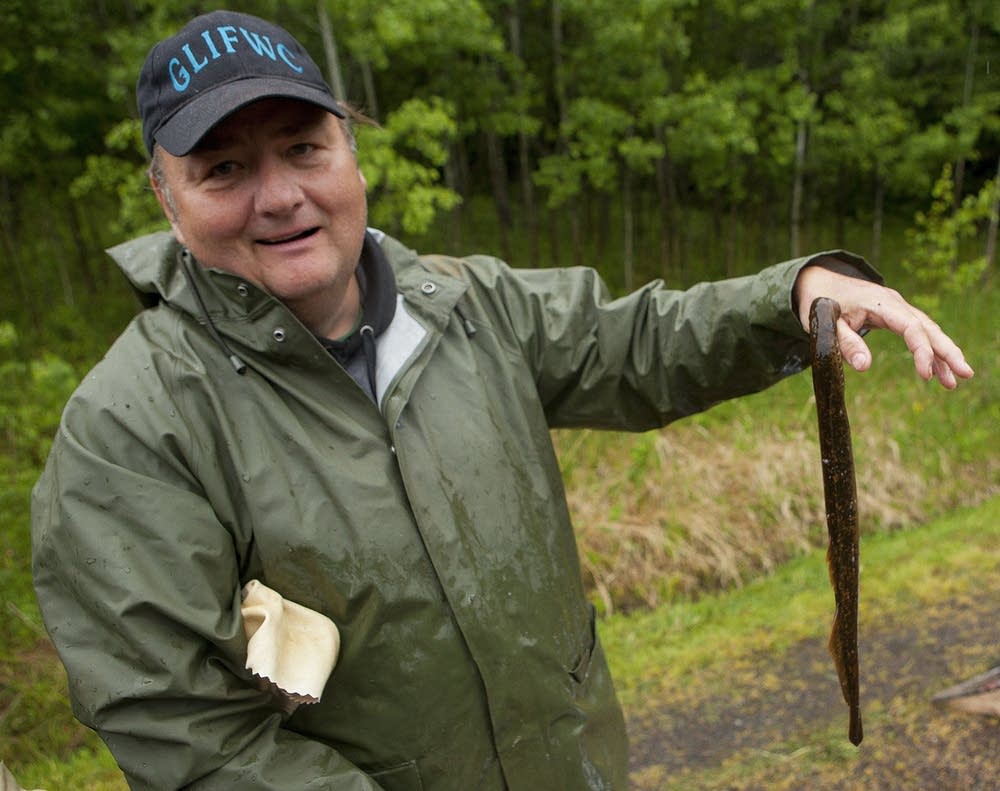
Lamprey use their many teeth to latch onto the side of lake trout and suck their body fluids until the trout die. It's estimated that each lamprey kill between 10 and 40 pounds of lake trout during their lifespan, which is estimated at 18 months. (Derek Montgomery for MPR) link to this photo

Bill Mattes, Tom Davies

3

Great Lakes Indian Fish and Wildlife Commission section leader Bill Mattes, right, retrieves a net containing one lamprey from GLIFWC fisheries aide Acorn Armagost (not pictured) while Tom Davies, left, with the United States Fish and Wildlife Service looks on Thursday, May 24, 2012, near the Brule River in northern Wisconsin. (Derek Montgomery for MPR) link to this photo

Acorn Armagost

4

Great Lakes Indian Fish and Wildlife Commission fisheries aide Acorn Armagost uses a net to search the bottom of a containment area for lamprey Thursday, May 24, 2012, along the Brule River in northern Wisconsin. A step system is used to catch the lamprey. A dam along the Brule River is in place that is too high for fish and lamprey to pass. On the side of the river is a step system, which can be surpassed by trout and other fish, but at one portion of the system, the steps are too high for the lamprey to jump and they end up swimming into a containment area that they cannot escape. (Derek Montgomery for MPR) link to this photo

Lamprey

5

Lamprey are caught and thrown into coolers for later examination Thursday, May 24, 2012, near the Brule River in northern Wisconsin. (Derek Montgomery for MPR) link to this photo

Brule River

6

A step system along the Brule River in northern Wisconsin is used to spare fish, but catch lamprey. (Derek Montgomery) link to this photo

Signs of lamprey wound

7

DULUTH, Minn — A faint sign of a lamprey wound is visible on the side of this Siscowet Lake Trout captured Tuesday , May 22, 2012, on Lake Superior north of Duluth, Minn. (Derek Montgomery for MPR) link to this photo

Lake trout

8

DULUTH, Minn. — From nets dropped in 150 feet of water, this lake trout made it's way to the surface into the hands of Minnesota Department of Natural Resources fisheries biologist Corey Goldsworthy (not pictured) to be examined for signs of lamprey wounds Tuesday, May 22, 2012, on Lake Superior north of Duluth, Minn. (Derek Montgomery for MPR) link to this photo

Lake trout

9

DULUTH, MInn — The Minnesota Department of Natural Resources completed their May survey of lake trout Tuesday, May 22, 2012, on Lake Superior north of Duluth, Minn. The lake trout caught in nets were being examined for signs of lamprey wounds. (Derek Montgomery for MPR) link to this photo

Corey Goldsworthy, Ryan Bart

10

Minnesota Department of Natural Resources fisheries biologist Corey Goldsworthy, right, reacts quickly to catch a lake trout that was becoming untangled from its net Tuesday, May 22, 2012, on Lake Superior north of Duluth, Minn. With the help of intern Ryan Bart, Goldsworthy was hauling in nets dropped into Lake Superior to catch lake trout as part of their May survey of the fish to look for signs of lamprey wounds. (Derek Montgomery for MPR) link to this photo

Ryan Bart, Corey Goldsworthy

11

Not all the fish caught in nets are lake trout. Here, intern Ryan Bart, left, and Minnesota Department of Natural Resources fisheries biologist Corey Goldsworthy, work to extract two smelt that were caught in nets they dropped into Lake Superior to catch lake trout as part of their May survey of the fish to look for signs of lamprey wounds Tuesday morning on Lake Superior north of Duluth, Minn. (Derek Montgomery for MPR) link to this photo

Corey Goldsworthy, Ryan Bart

12

DULUTH, Minn — Minnesota Department of Natural Resources fisheries biologist Corey Goldsworthy, left, and intern Ryan Bart retrieve a buoy that was in Lake Superior to mark the location of nets dropped to catch lake trout as part of their May survey of the fish to look for signs of lamprey wounds Tuesday, May 22, 2012, on Lake Superior north of Duluth, Minn. (Derek Montgomery for MPR) link to this photo

View other Minnesota in Photos Slideshows:

Nature Valley Grand Prix
Photos from the Uptown Minneapolis Criterium on Friday.

Former Nazi SS commander
The AP says a Minneapolis man has a secret past.

Como Zoo's Gorilla Forest
Get a look inside the largest mesh gorilla enclosure in North America.

Appetites: Summer relishes
The trick to a dish is often just the right twist of flavor.

Minnesota Scenes: May
Your photos from Run or Dye, the same sex marriage debate and more.

Scrambling for cattle feed
Visit a Minnesota dairy operation caught in a feed shortage.

Clancey's Meats and Fish
Grilling season is here, and we visit this old school Minneapolis merchant.

Heart of the Beast May Day Parade
The annual tradition in Powderhorn Park attracts thousands of people

The deadly St. Paul landslide
Two children died on a fossil hunting school field trip.

The family cabin getaway tradition
Take a look as a family opens their cabin in a remote part of the state.

More slideshows »