


Biobank ethics: What you should know about your genes
Go Deeper.
Create an account or log in to save stories.
Like this?
Thanks for liking this story! We have added it to a list of your favorite stories.


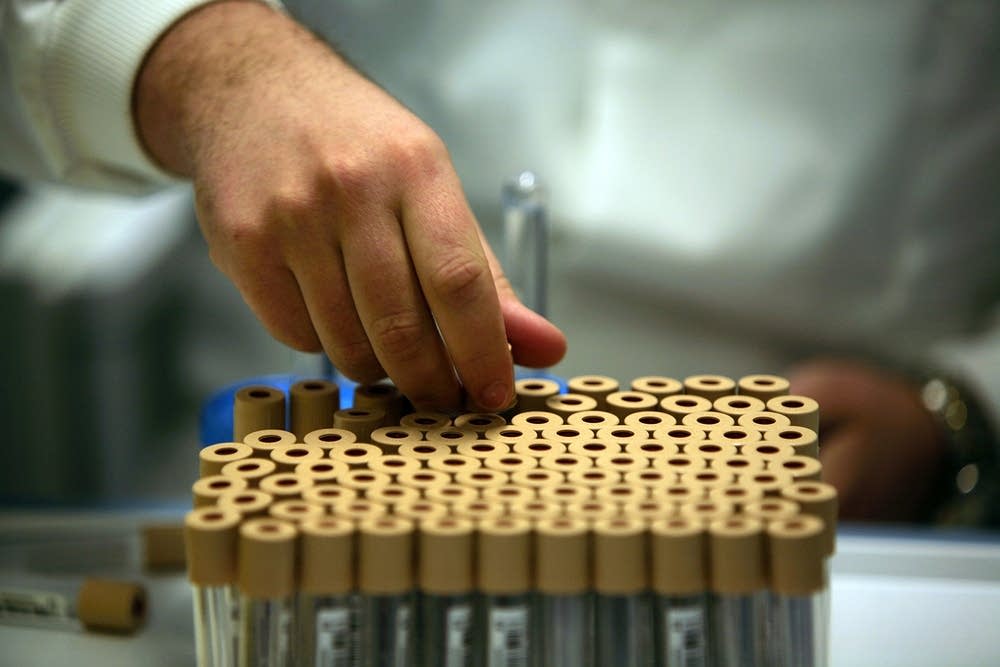
We know that our DNA is uniquely ours, but do we really own our own genetic information? In biobanks across the country, researchers store millions of genetic samples taken from patients - sometimes without their knowledge - and there are no clear guidelines on how to deal with the tissues and findings.
What obligation do these researchers have to return samples - and any unexpected findings from the samples - to patients and their families?
Susan Wolf, McKnight presidential professor of law, medicine and public policy at the University of Minnesota, has a report discussing 10 suggestions for biobanks and individual research findings. The paper will appear in Genetics in Medicine.
"The work we're doing now focuses on whether researchers have any responsibility to offer back to research participants genetic findings that may have immediate, health affecting results," she said. "It's a terribly important issue - really it's the biggest controversy in genetic research today."
Turn Up Your Support
MPR News helps you turn down the noise and build shared understanding. Turn up your support for this public resource and keep trusted journalism accessible to all.
Wolf said they are a lot of questions about when it is appropriate to contact individuals about findings.
"How sure do we need to be of what a genetic finding means before we have a researcher contact individuals?" she said. "What if it looks bad and horrible but we're not quite sure what the finding means - should we just shut up or is it doing a disservice? Do we underestimate what people are capable of understanding?"
Wolf will join The Daily Circuit Thursday to discuss her suggestions. Art Caplan, director of the Center for Bioethics at the University of Pennsylvania in Philadelphia, will also join the discussion.
"There need to be policies about what researchers need to tell you, particularly when they find things in your tissue that you didn't expect," he said. "Let's say I go in for a test for breast cancer and they see DNA that points out that I'm predisposed for Alzheimer's - do they tell me that they found that? I didn't ask."
Putting researchers into a position to discuss findings with patients also raises concerns, Caplan said. They aren't trained like doctors to interact with patients.
"Think of a person who's been chained to the lab for years, just running tests and interacting with machines," he said. "There's no counseling training for those people, there's no clinical training. They didn't get into this kind of research to talk with patients."

Dear reader,
Your voice matters. And we want to hear it.
Will you help shape the future of Minnesota Public Radio by taking our short Listener Survey?
It only takes a few minutes, and your input helps us serve you better—whether it’s news, culture, or the conversations that matter most to Minnesotans.


