Photo: #In a "prone hold," the child's arms and legs are held by at least two adults while the child lies on his/her front, in a face-down or face-to-the-side position.
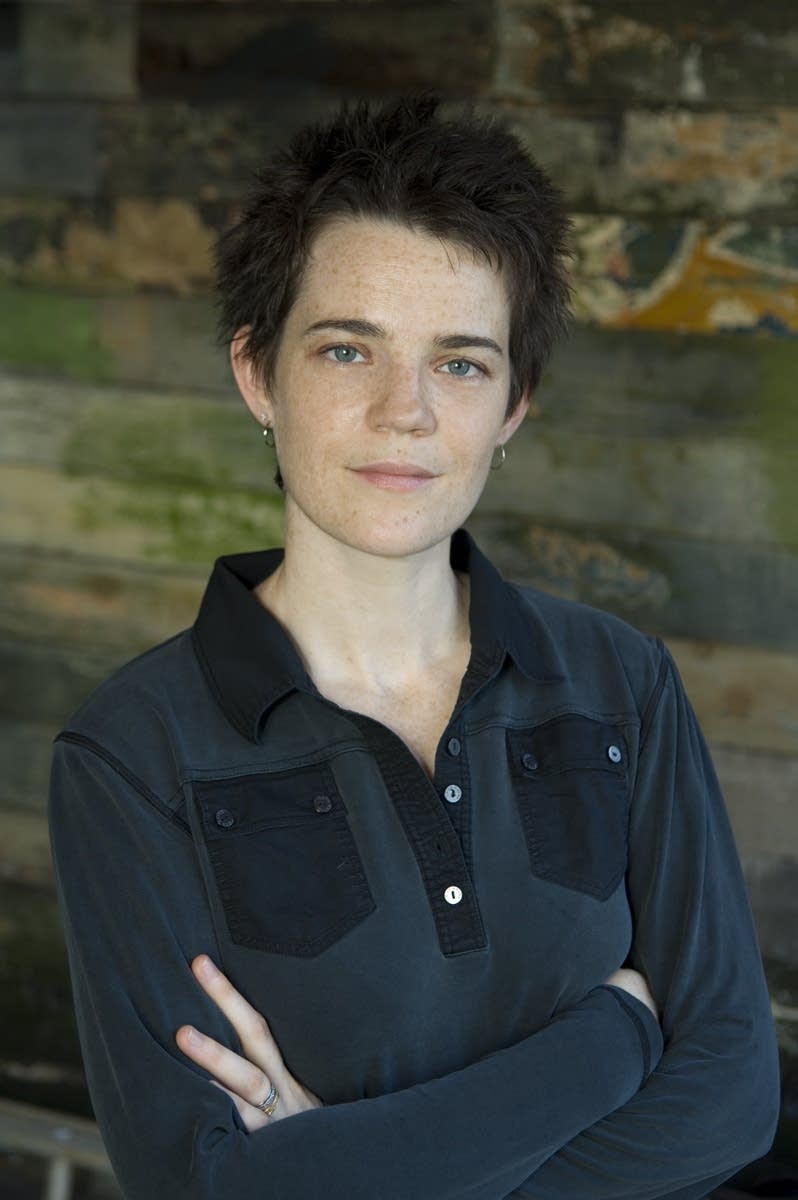
Photo: #Haddayr Copley-Woods lives in Minneapolis and is a writer, blogger and mother.

Commentary

Imagine prone restraint being used on your child

by Haddayr Copley-Woods

Haddayr Copley-Woods, Minneapolis, is a copywriter, blogger and mother. She is a source in MPR News' Public Insight Network.

Although 15 states across the country have outlawed the practice of prone restraint in classrooms, the Minnesota House recently put forth a bill recommending the continuation of this controversial form of restraint for another year. For more study. As if the "data gathering" here did not involve practicing a potentially dangerous hold on small children to see what happens.

This, despite evidence that in rare cases prone restraint has killed children. This, despite a report from the Department of Education that prone restraint is used only on kids receiving special education services. Despite the evidence that although only 13 percent of kids in special ed are African-American, 44 percent of the incidents of prone restraint involved African-American kids. And despite the data that this extreme form of restraint is not restricted to large teenagers, but is primarily used on 10-year-olds.
Advocates for continuing this practice make statements that sound as if there were no alternative — as if the only choices in dealing with an out-of-control child were either prone restraint or nothing. That's a false choice. Kids are restrained in public schools every day: Aides break up fights. A teacher grabs a kid about to run out into traffic. An autistic kid melting down is carried out of the classroom into a safer, quieter place to calm down. Safely. Naturally. Gently.

Even my own kid, who is autistic, believes that when he was younger there were times when he was overwhelmed and needed to be restrained in school. But this sort of extreme restraint is absolutely terrifying overkill.

To see what prone restraint is, look at the picture at the top of this article.

Look at this calm scene. Look at this language. "The child's arms and legs are held ... while child lies on his/her front... ." How do you think the child gets down there? Do you think that in the middle of a meltdown, a child who is autistic, or is emotionally or behaviorally disturbed, calmly lies down on his stomach? Do you think the adults are able to hold their hands lightly and comfortably on the arms and ankles?

Do you believe that if you were an angry, frightened, flailing 10-year-old, held in this position by people far larger and stronger than you, the result would be that you calmed down?

I decided to ask an autistic 10-year-old myself, and my son kindly submitted to this hold while in an already calm and agreeable state, much like the image above.

As I held his arms and his father held his ankles, I asked Arie how he thought he might feel if he were very upset and someone were holding him like this. He thought about it, and then spoke, his voice muffled by the floor. "Like a lesser being," he said. "Like an animal."

And this, my people, is the crux of my theory as to why our Legislature, our school districts, and even our Department of Education are allowing a practice to continue that has been shown to be not only potentially dangerous, but also applied wildly disproportionately to disabled African-American kids.

I think those who authorize this type of restraint see the affected kids as lesser beings.

Well, I'll tell you what I see: my own kid. My own tiny 10-year-old kid, crying and humiliated, furious and frightened, smashed down on his face on the floor and held there by two large adults — sometimes for as long as 20 minutes.

It is an ugly theory, and I hope that I am wrong. But how is it that someone can see this image and think this is appropriate to do to a 10-year-old?

I'll tell you how they can think it's appropriate: If they see these kids as "other." As dangerous and frightening. As lesser beings.

This is my kid you are talking about, you calm and reasonable advocates for prone restraint. My beautiful, brilliant, maddening, precious kid. He is not an animal, and neither are his African-American classmates. He is not a lesser being, deserving of harsher, different treatment. He is just a kid.

Comments (16)

Thanks for putting this issue front-and-center, and thanks to Arie for both volunteering and for providing such an insightful explanation of what it feels like to be restrained. I'm certain our society and our educational system can come up with a better solution to manage children in crisis.

Posted by Trout Lowen from Minneapolis, MN | March 7, 2012 11:43 AM


Prone restraint can kill a child within minutes, and it has happened. That is why our nation's mental health organization SAMHSA has promoted reducing and eliminating restraint and seclusion. There is research to back it up. Why aren't legislators and teacher actually reading it???

These are children with very real disabilities who are humans- not animals. These schools are getting paid money to educate not torture children. Educators need to try reading the RESEARCH on this topic. Seclusion and restraint are NOT evidenced based. The nation's mental health industry disavowed these barbaric practices well over 10 years ago, and now promote effective, evidenced based alternatives to seclusion and restraint. Schools need to get with the program, catch up to the future and learn about how to teach without traumatizing disabled kids. A first start is to READ the documentation on our nation's mental health site SAMHSA. http://www.samhsa.gov/matrix2/seclusion_matrix.aspx

There are schools, who are successfully teaching disabled children with severe behaviors, who DO NOT use seclusion and restraint. They can do it too if they are willing to learn the alternatives.

Posted by Kym Grosso from West Chester, PA | March 7, 2012 1:33 PM


The article is well written and about a difficult subject. Unfortunately, I think this article is lacking significantly. While Prone is not a pleasant means of restraint, restraint of any form is to be done as the last resort to maintain safety of the children and staff. Size can be deceiving - one of the strongest and most aggressive children I have worked with was tiny - thin frame, short, and incredibly strong and dangerouse when upset. Not only did he scare staff but he TERRIFIED his peers. "Calmly" picking up a child to remove them from the room is not usually an option, and if it is, then Prone is not appropriate. I also take offense at bringing race into this argument - it is not about race, it's about aggression and safety. Clearly, based on reading this article, you are writing from a privileged point of view; not based on your race but based on the fact that your child has never demonstrated the level of safety risk that would require this sort of intervention. If he had, then you would have better insight and understanding about why restraints are needed. If Prone is done incorrectly, the issue should be about effective training; not removing a tool that can help keep all involved safe.

Posted by Erin H from MN | March 7, 2012 1:41 PM


MN issued a report regarding the use of restraint. The Report's statistics on prone restraint look pretty reasonable. It would be interesting to see if 50% of standing or seated restraint lasted less than a minute or 90% of standing or seated restraint lasted less than 5 minues.

http://education.state.mn.us/MDE/mdeprod/groups/educ/documents/basic/041371.pdf

The Report states that the total number of incidents of prone restraint is 455 where approximately half or 227 of those restraints lasted less than a minute or less; nearly 90% or 410 restraints lasted less than five minutes and 78% of the students restrained prone were special education students. The Report states that there are other types of restraint/holding methods being used in and by MN schools including 1. standing; 2. seated and 3. supine. It would be interesting to see how long did the restraints last on children who were held in a standing? seated? supine? configuration broken down in 50% and 90% increments. And how many of the students restrained in a standing? seated? supine? position were special ed?

Posted by Deborah Jones from AL | March 7, 2012 2:36 PM


Erin H: Prone restraint is used disproportionately on African-American children. I didn't bring race into this. The statistics did.

Posted by Haddayr Copley-Woods | March 7, 2012 3:20 PM


Erin H: flawed conclusion. Have you ever met Haddayr's son? Do you know his behavior? How would you know what frame of mind she comes from? You assume because she doesn't see things your way that she must not share your experiences. That's fairly arrogant.

I'm a parent. Our son doesn't have special needs yet (so far, so good), so I lack specific experience, but the use of these techniques smacks of laziness on the part of educators. If other states have banned the restraints and kids aren't burning their schools down left and right, there's likely other ways to handle these situations that don't involve restraining children. Perhaps MN educators and legislators should do some homework and find out what else works.

Posted by Matt Stoll from Saint Paul, MN | March 7, 2012 4:18 PM


The number of states the blogger is citing as having banned prone restraint in schools i.e. 15 states that have presumably banned is an incorrect number. The report upon which this blogger's statistic relies is erroneous and MN-DOE should amend its Report so that it is accurate.

The following states have NOT banned prone restraint: have not banned prone restraint in schools: California, DC, Maryland, Nebraska, Ohio, Rhode Island, SC, and Wisconsin.

While GA has banned prone restraint, there is an administrative hearing that effectively nullifies the DOE's regulation. The Court ruling states as a matter of law that a person has a right to use reasonable force in defense of self and others regardless of any State law, regulation or policy. In GA the case at bar the restraint used was a choke hold -- which is considered lethal force. Thus if the DOE cannot ban choke holds when reasonable, the GA-DOE has no authority to ban prone restraint when reasonable.

Posted by Deborah Jones | March 7, 2012 8:31 PM


I'm not quite as concerned about the discomfort of the hold. Discipline is never fun. However, I am curious *how* this is killing children. Are they suffocating?Wouldn't a para or teacher realize that the hold had worked and now they need to release? How tragic!

Posted by K Becker from Mankato, MN | March 7, 2012 8:47 PM


I have worked in Special Ed. for 10 years, ages 3 thru 22. The past 5 specifically with Aspergers and Emotional Behavior Disorder. I also have a 14 year old mentally impaired/bipolar son. People who do not work with these kids do not understand what goes on with these kids. Are we supposed to allow these kids to throw chairs, desks & pencils, rip & throw papers & books & other's hard work, flip tables, knock down file cabinets & shelves, rip their clothes & shoes. Or how about stab themselves with pencils & claw themselves until they bleed & poke their eyes. It is always a last resort. We are trained to try to stop the progression of a meltdown. It doesn't always work. When a child is in a rage, they don't stop & think, "Wow this hold is humiliating". All they see is red & hate. The hold actually calms them & allow them to collect themselves. It works like a weighted vest. When they are calm, they are let go. I know a teacher that had a student thank him for restraining him. Yes, some students learn that it helps them, even though they can't self impose it when they are in a rage. I also agree with K. Becker.

Posted by Annette S. from MN | March 7, 2012 11:18 PM


If we are not committed to actively seeking a more peaceful solution than the one that most public schools are currently using to manage behavior and we don't do better when we know better than we are abusing our power and authority. We must be vigilant and relentless in our search for a better way. These methods must become part of the long list of past ignorances, as we commit ourselves to researching, recognizing and practicing new ways that build the human spirit rather than crush it, from the beginning. It takes all of us, not just the school, the parents, or the children. It takes a country that supports healthcare, teachers, mental healthcare, and an educational system that includes all children. These children are invisible to most, Let's make them visible, and bring on the change!

Posted by Laragene Williams from Arizona | March 8, 2012 10:54 AM


Sometimes kids have to be restrained. But I've not seen a single argument for why prone restraint -- which has killed children, and which is what's being discussed here -- is necessary as an option. There are other holds that have NOT killed children and which would also prevent an enraged child from harming self, others, or property.

The arguments in favor of prone restraint seem to be focusing on holds across the board, which BLOWS MY MIND because this article SPECIFICALLY NOTES that the arguments in favor of prone restraint act like it's prone restraint, or nothing, which is totally false. And voila, in the comments, a bunch of arguments acting like it's prone restraint, or nothing! (Or prone restraint and letting children GOUGE THEIR OWN EYES OUT WITH PENCILS. Because sure: if our choices were allowing prone restraint, or allowing children to GOUGE THEIR OWN EYES OUT WITH PENCILS, prone restraint would be the lesser evil. But that's not the choice. The choice is restraining a violent child in a way that's safe for them, or restraining a violent child in a way that restricts their breathing and could accidentally kill them.)

Posted by Naomi Kritzer from Minneapolis, MN | March 9, 2012 1:57 PM


Naomi,

Don't fool yourself, the people advocating for the prone restraint ban in your state were actually trying to ban all restraint and seclusion even when used to protect your and other student's safety. The MN legislators only entertained their argument to extend as far as prone restraint in the legislation.

The groups pushing for the ban on restraint and seclusion are ideologically driven, predatory and predisposed to defamation, lies, half-truths and innuendo to discredit anyone who would oppose them. Their arguments against restraint usage including prone restraint have no basis in science or fact.

For example, ALL of the medical research states that prone restraint that does not place weight or that places minimal weight on a person's back does not cause restriction of air flow. The only people saying otherwise are the ones without the MD next to their names.

MN DOE came out with a report showing 455 instances of prone restraint where approximately 1/2 (227 restraints) lasted less than a minute and 90% (410 restraints) lasted less than 5 minutes. There were no fatalities, and no injuries were cited in the report. I wonder if other restraint methods were as successful.

On Thursday the American Association of School Administrators (AASA) came out with a report entitled: Keeping Schools Safe: How Seclusion and Restraint Protects Students and School Personnel. http://www.aasa.org/content.aspx?id=22648

Posted by Jimmy Smith from MN | March 10, 2012 12:19 AM


FYI, the statistics in DOE's report that pulls out the racism card are are about as truthful as the Feds saying there's no inflation because they do not count the cost of food and fuel in their inflationary numbers.

For instance the report states that students with disabilities are proportionally restrained 2x more than students in general ed. What the report fails to state is that while special education students comprise 14% of the student population, they account for 38-43% of the violent incidents.

In math, this means that special education students act out violently 4 times as much as general education students, but are restrained only 50% of the time that general ed students are restrained.

As for the disproportionate number of afro-american students being restrained maybe there are factors not included in the report i.e. maybe the restraints are motivated by the student's behavior and not any underlying racist motive.

Frankly DOE's report is insulting, the idea that most public school employees are racist is absurd. Contrary to the false allegations being made, the overwhelmingly vast majority of teachers do not want to restrain a child. Teachers, administrators and other school personnel did not enter this profession to harm children.

Posted by Jimmy Smith from MN | March 10, 2012 1:08 AM


I felt that the original article disparaged all restraints and wrote accordingly. I have never seen or heard of the "prone hold" until now and don't know why anyone would want to use it when better ones are available. The only floor hold we do is the "basket hold" and it is very adaptable. I have even shown (did) it to my husband who is a cop in the Air National Guard. He said he will remember that one because it is effective, but doesn't hurt. Are restraints ideal? No! What is the solution? Nobody seems to have an answer, but the problem is getting worse. It breaks my heart to hear a kindergarten teacher say, "I'm no longer a teacher. I'm a zoo keeper!" What about when these kids become adults? These behaviors as an adult will land them in jail! ADD, ADHD, EBD, & ASD is growing exponentially. Can anyone say unnatural food dye that Europe as banned, but U.S. has not. Oops, change of topic.

Posted by Annette S. from MN | March 12, 2012 11:24 PM


I respect your right to have an opinion on this subject. However, I take slight offense to your assumption that anyone who does not share it sees the youth subjected to prone restraints as lesser beings. Last year, I was a 17 year old emotionally troubled minor placed in a youth treatment program. I was put in this program because I was a danger to myself. (I am happy to say I have fully recovered from the state I was in last year.) While there, I was subjected to the prone restraint on a number of occasions. Every time, it was as an absolute last resort. I believe, as long as it is a last resort, it can be necessary. I don't see those subjected to it as lesser beings, because I have been subjected to it.  I do not see myself as a lesser being. I also do not believe I was a lesser being at the time I was being restrained. I see youth who are restrained as equal human beings who  are having a difficult time. This is true regardless of their circumstance and reason for needing treatment. Cases in which injury or deaths have occurred have been cases in which prone was not used properly. A correctly administered restraint does not restrict breathing. It saddens me to hear that a higher percentage of African American youth are subjected to prone. It is possible that bias may cause some to resort to prone sooner than they would deem it necessary otherwise. However, this reveals an issue of prejudice, not an issue with the restraint itself. 

Posted by Jaiden Dowler from MA | April 29, 2012 8:52 PM


Behaviors and behavior change can be intense and requires a heart and mind for safety. There are some students who do present with persistent, non-redirectable aggressive and destructive actions. These behaviors will pose imminent harm for the child, their peers, and the educational interventionists. It is at that criteria towards safety, that such intense procedures of physical restraint and seclusion are warranted. The consideration for a standing, sitting, prone or supine restraint depends on the intensity of the behavioral profile. It is awfully dangerous when a highly agitated and aggressive person is slipping out of the hold, less effective holds can increase the duration of the hold - as the child may pose the 'cat and mouse' banter of their actions against or counter to the efforts of the intervention(ist). If teams are considering the use of physical holds to support significant behavioral profiles at risk of injury and safety - be knowledgeable, be good (trained), and be efficient.

Further, while I very much appreciate the efforts of school-based mental health to embrace a ban on such interventions, the children with significant profiles are not admitted to those programs and if they are admitted, they are discharged or returned to their public schools if their behaviors are too intense. Unfortunately, those with the significant behavioral profiles who have mental health needs are not being adequately served.

Again, behaviors and behavior change can be intense.

Posted by Jan Ostrom from Otsego, MN | June 7, 2012 7:04 PM


Post a comment

Please be civil, brief and relevant.

E-mail addresses are never displayed but they are required to confirm your comments. All comments are moderated. MPR reserves the right to edit any comments on this site and to read them on the air with attribution. Please read the Terms and Conditions before posting.

Inform our coverage and become a source in the Public Insight Network.

* indicates required field

*
*
*
 

characters remaining!"

You must be 13 or over to submit information to Minnesota Public Radio. The information entered into this form will not be used to send unsolicited e-mail and will not be sold to a third party. For more information see Terms and Conditions and Privacy Policy.