Minnesota Sounds and Voices: Pastor retires from ministering to recovering addicts
Go Deeper.
Create an account or log in to save stories.
Like this?
Thanks for liking this story! We have added it to a list of your favorite stories.

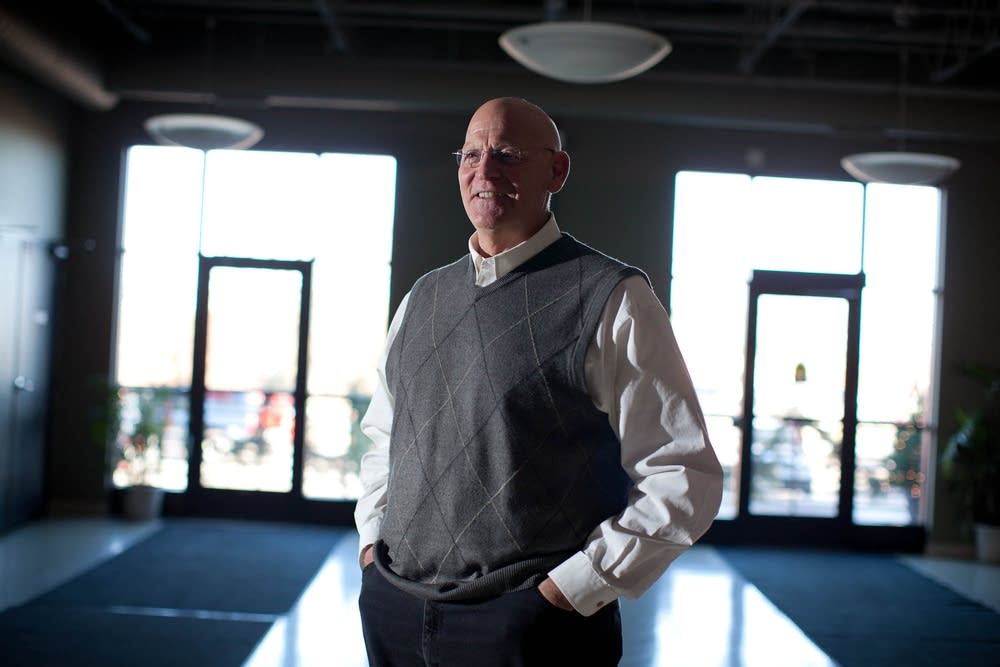
"The end of our disease is death or recovery," the Rev. Jo Campe says of the addiction to alcohol that prompted him to contemplate suicide nearly 17 years ago. "There aren't any other options."
It's a message he's preached consistently as a founder of The Recovery Church in St. Paul, one of only a handful of such faith communities around the country where the sole mission is to help people recover from alcoholism and other addictions.
But this week, Campe begins his retirement from leading the Methodist congregation, which is housed in a renovated building that was once a funeral home on St. Paul's Harriet Island.
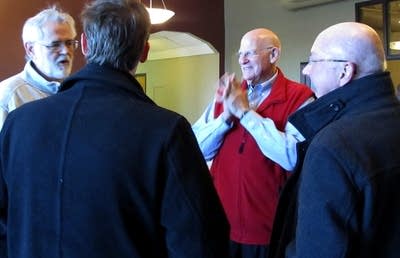
At his final service on Christmas Day, the tall, broad-shouldered man of 67 years was a picture of health and vitality as he greeted well wishers. Rightly or wrongly, many of them, and others, believe that because of their addiction they are not welcome in church.
Turn Up Your Support
MPR News helps you turn down the noise and build shared understanding. Turn up your support for this public resource and keep trusted journalism accessible to all.
"They're usually dragged into The Recovery Church by some caring individual, sponsor or someone they know or like, and they kind of question why they're coming at all," Campe said. "When they do come in, I hear over and over again, 'This has felt like home.'"
Some of the service comes from familiar religious tradition - liturgies, sermons -- and some of it is anything but.
"When you have a pastor who stands up Sunday morning and the first thing out of his mouth is, 'My name is Jo and I'm an alcoholic,' I know that there is somebody up there who knows something about me, and something about my life and something about the struggles I'm going through," said Recovery Church council chairman Bob Swoverland.
That approach has helped swell church membership to nearly 700 over the 11 years of Campe's leadership.
Lots of churches offer recovery programs, but they're part of an array of other programs. The Recovery Church's mission is singular: It's established solely to minister to those in recovery. Besides services, there are support group meetings morning, afternoon and evening virtually every day of the week to help addicts with recovery.
Campe said that in part it's a reaction to a crisis facing treatment programs: Money is scarce and centers around the country have folded. Meantime, Campe there is a lot of pressure on addicts for treatment to work sooner rather than later.
There's also much to be done to help people understand that addiction is a disease, not a moral failing.
"You'd never kick out somebody because they had a relapse of cancer," he said. "If somebody had a diabetic reaction or shock you'd never think about putting them out of the family gathering."
As Campe and his wife ready for his retirement, which they plan to fill with time in the outdoors hunting, fishing and camping, he said he plans to keep working with addicts in recovery as a consultant. His wish is that everyone would have a group to help them overcome addictions, whether it's drugs, alcohol, pornography or something else.
"Almost everyone has some addictive quality," he said. "And what the 12-step program allows you is a way to live life differently, to live life in a certain way which, when problems come up, there are spiritual ways to solve those problems."