


How can we feed the world AND sustain the planet?
Go Deeper.
Create an account or log in to save stories.
Like this?
Thanks for liking this story! We have added it to a list of your favorite stories.


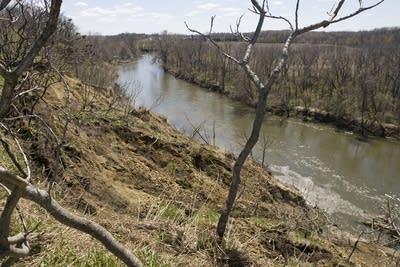
Abundant erosion can be seen along the banks of the Blue Earth River in Vernon Center. Lake Pepin is seeing an increase in the amount of sediment present due to runoff from rivers in Minnesota. It's thought that about 75 percent of the sediment reaching the lake comes from the Minnesota River, and a large amount of that comes from the Blue Earth and LeSueur Rivers near Mankato.
MPR Photo/Alex Kolyer
Gallery
Turn Up Your Support
MPR News helps you turn down the noise and build shared understanding. Turn up your support for this public resource and keep trusted journalism accessible to all.


