Commentary
Will we ever get action on climate change?
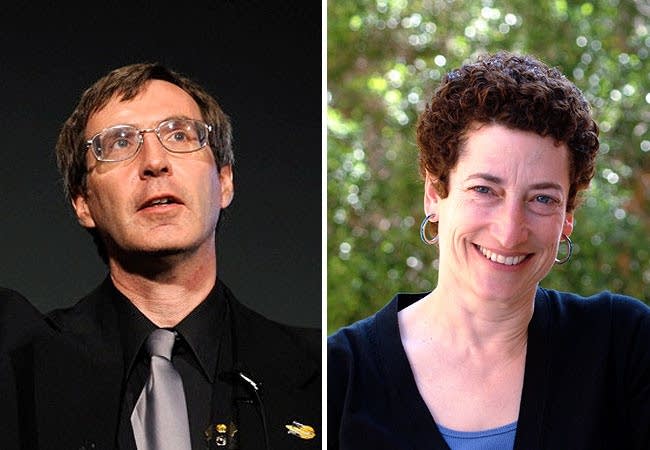
By Naomi Oreskes and Erik M. Conway
In 1993, Willett Kempton, a prominent social scientist at the University of Delaware, posed the question, "Will public environmental concern lead to action on global warming?" At the time, it seemed that it would.
In 1988 we had experienced record heat in the United States: The U.S. National Climatic Data Center (NCDC) estimated direct losses from heat waves and drought at $40 billion (plus $30 in indirect losses) and 5,000 to 10,000 excess deaths--effects that received widespread publicity. In Congress, U.S. Sens. Timothy Wirth and Bennett Johnston introduced the National Energy Policy Act "to establish a national energy policy [to] reduce the generation of carbon dioxide and trace gases as quickly as is feasible in order to slow the pace and degree of atmospheric warming." While running for president, Vice President George H.W. Bush pledged to use the "White House effect" to combat the "greenhouse effect." And in 1992, the new U.S. president signed the U.N. Framework Convention on Climate Change, which pledged the United States, along with 164 other signatories, to prevent "dangerous anthropogenic interference" in the climate system.
Eighteen years later, we've done little to fulfill that promise, and globally, temperatures continue to rise.
Just this summer, the U.S. National Oceanic and Atmospheric Association (NOAA) released its latest summary of the state of the climate, which concludes that the last three decades have been "progressively warmer than all earlier decades." While the data for 2010 are not yet in, scorching temperatures around the globe -- including a record 102 degrees in Moscow -- has led NOAA to conclude that 2010 will be one of the hottest years on record. Meanwhile, the need to reduce our dependency on oil was made acutely clear as we watched helplessly oil gush from BP's damaged rig in the Gulf of Mexico.
So why are the American people not clamoring for action?
One reason is that a significant percentage of the American people -- about 24 percent, according to one recent study -- still doubt or dismiss the severity of the problem. On the basic question of whether climate change is a serious threat, it seems that we have gone backward. In 1989, in response to a survey asking if various problems were "serious," 79 percent of respondents said "yes" for the greenhouse effect, and when asked about the level of the threat, 69 percent said the greenhouse effect was a "clear threat." Another poll that same year found 60 percent "extremely" or "somewhat" worried.
Yet this year, a major study found only 41 percent of respondents describing themselves as "alarmed" or "concerned." Even as global temperatures have risen, concern about global warming has fallen.
Part of the explanation for this involves confusion or skepticism about the science. Scientifically, we know that just as a single hot summer does not prove global warming, neither does a single cold winter disprove it. Yet 51 percent of respondents recently said that the snowstorms in the eastern United States last winter made them question whether global warming was occurring. And 24 percent doubt or dismiss the scientific evidence entirely.
There is an explanation for this state of affairs, as we explain in our new book, "Merchants of Doubt: How a Handful of Scientists Obscured the Truth on Issues from Tobacco Smoke to Global Warming."
Climate change has been subject to a sustained effort to challenge the scientific evidence, and to use irrelevant anomalies as counter-evidence against the overall pattern. Beginning in the late 1980s -- just as the scientific evidence of global warming was beginning to gel -- conservative scientists and regulated industries joined hands with think tanks such as the George C. Marshall Institute, the Cato Institute, the American Enterprise Institute and the Heartland Institute to question that evidence.
If the American people and our leaders came to accept the severity of the threat, then we would accept the need for government intervention in the marketplace to control the use of fossil fuels--and maybe other things as well.
Climate change is a market failure -- a "negative externality" in economists' jargon -- a problem whose costs are not reflected by the market price of fossil fuels, and for which the free market has not, of its own accord, offered a solution. Free-market ideologues have resisted this conclusion for obvious reasons.
While there are many principled conservatives and libertarians, it is hard to avoid the conclusion these think tanks, which receive substantial funding from the fossil fuel and other regulated industries, follow no principle except self-interest. Emissions trading may or may not be the answer to global warming, but whatever happens, it will not be devastating to our economy and way of life.
On the other hand, if we do nothing to stop the rise of global temperatures, the melting of sea ice and the thawing of permafrost, then sea level will rise, coastal erosion will increase, heat waves will become more deadly, hurricanes will become stronger, insect pests will change their geographic distribution, and Glacier National Park will lose its glaciers.
If currents trends continue, Minnesota might soon feel and look more like Missouri. And that will affect our economy and our way of life.
----
Naomi Orekes is a historian of science at the University of California, San Diego. Erik M. Conway is a historian of science living in Pasadena, Calif.
Comments (10)
Sigh. Climate change policy, and how to change it, is a psychological problem; not a scientific problem. At this point the subject needs to be handed over to the shrinks in order to be dealt with effectively.
If Minnesota warmed slightly, would that be a bad thing?
The authors seem more like propagandists than scientists.
The basic forcing from doubling CO2 is about 1.1 degrees C. CO2 levels go up 2 ppm each year and the current CO2 level is about 390 ppm. At current rates, it will take about 2 centuries to raise the temperature about 1.1 degrees C! That is an average of 1/200 of a degree per year! The warming effect might be leveraged or dampened by feedbacks. Nobody understands how those feedbacks work. Based on the last several hundred million years of climate, there is reason to believe the feedbacks will be negative (runaway global warming is very unlikely).
An example of a feedback is when it gets warm, you tend to get afternoon thunderstorms which cool things off a bit. Sounds simple but clouds are mostly a great mystery to climate scientists (who admit it will take many years before they thoroughly understand the formation and effect of clouds).
A nice website to read about this stuff is WattsUpWithThat.com. It is produced by a meteorologist and is usually quite visual and easy to read. The more you educate yourself, the better.
CO2 is a factor in the climate of the earth but it is a relatively small factor and just one of many, many factors that affect our climate. Raising energy taxes in the middle of a profound recession is insane economically, especially when there is no proof that CO2 will have a significant negative impact on climate.
Couldn't agree more Brian. A website that I think many people might find interesting is climate.nasa.gov
Steve is the perfect example of what Naomi and Erik are talking about. He gives a climate sensitivity of 1.1 degrees but the 5-95% confidence range is between 1.5 and 6.2 degrees C with the likeliest value being 2.8 degrees C.
As for the presumed negative feedback the Pliocene, about 3 million years ago, temperatures were 2-3 degrees C warmer and sea level was 25-35 meters higher.The late Eocene, temperatures were 3-5 degrees warmer, and sea level was about 70 meters higher because almost all ice disappeared. While the projected sea level rise is much smaller than these hope for a negative feedback saving us is a pipe dream. In fact, recent studies have shown that the cloud feedback may be slightly positive.
In short, the so-called skeptics just make stuff up. Challenge each and every number they give. I'll close with a little encouragement to Naomi and Erik. Bjorn Lomberg has changed his mind. Perhaps others who are not captive the corporate disinformation will do the same.
I've heard that you can boil a live frog by putting it in a pot of room temperature water and heating it up slowly. It gets used to the gradual change and won't jump out. If you put the frog in already boiling water it will jump out. It seems to me the same principle is going on here on a grand scale.
Climate sensitivity and the direct heating effect of raising CO2 are two distinct things. The direct heating effect of raising CO2 is around 1.1 degrees C. There is no argument about that. Climate sensitivity is how the climate reacts when it is warmed. Climate sensitivity is not well understood now and probably won't be for decades. The last IPCC report was quite clear that many of the feedbacks that determine sensitivity are not well understood. These include things like biological feedbacks, cloud formation/impact,etc. The climate science models have been enormously wrong over the last 10 years in predicting global warming in the atmosphere. The warming of the oceans was also hugely less than the predicted by the alarmists (in fact the ocean heat content has flattened out over the last several years). Anybody who tells you that the earth's incredibly complex climate system is thoroughly understood is not telling the truth. If the earth's climate was thoroughly understood, why have the the climate scientists' predictions been so wrong? The best approach is to educate yourself. For sure read "Climategate: The CRUtape Letters" by Tom Fuller. Remember that many of these same alarmists 3 decades back were saying that the world was going into an ice age. Surprisingly, they had the same solution back then, tax energy. They are desperate to raise the cost of energy before the elections, even though it is economic suicide to do during a deep recession.
Great analogy, Al. It is going to take a long time to boil water if the temp only increases 1.1 degrees C every two centuries. The larger point is that the direct climate heating effect from raising CO2 at current rates is so tiny it is not measurable. We have time to directly educate ourselves and figure this out for ourselves. The alarmists are trying to stampede you by talking about catastrophes that are not going to happen. BTW, a great book is "The Resilient Earth" by Doug Hoffman. Doug really writes well and puts things in perspective. He has a website by the same name.
Instead of: "The direct heating effect of raising CO2 is around 1.1 degrees C." It should have been: "The direct heating effect of doubling CO2 is around 1.1 degrees C." Since each doubling of CO2 directly raises the climate temp by about 1.1 degrees C, this means it gets harder and harder to raise the climate temp. Each 1 ppm increase in CO2 has less impact than the previous 1 ppm increase. BTW, does anybody think that in two centuries, when we maybe have raised temps by about 1 degree by doubling CO2, that we will still be burning oil and coal for energy? By all means we should figure out how to replace coal and oil as fast as we can. Until we have figured that out, don't cut over to new energy sources until they are reliable and cost effective.
"The direct heating effect of doubling CO2 is around 1.1 degrees C."
That *is* the definition of climate sensitivity and every 5-95% confidence range of climate sensitivity excludes your number. TAR lists 1.5 - 4.5 degrees C. AR4 said, "likely to be in the range 2 to 4.5°C with a best estimate of about 3°C, and is very unlikely to be less than 1.5°C." The most recent survey since AR4 also cites 2-4.5 degrees C: http://www.nature.com/ngeo/journal/v1/n11/abs/ngeo337.html
Steve is right about the uncertainty in climate sensitivity but it's all on the high end. From the paper I cited:
"The quest to determine climate sensitivity has now been going on for decades, with disturbingly little progress in narrowing the large uncertainty range. However, in the process, fascinating new insights into the climate system and into policy aspects regarding mitigation have been gained. The *well-constrained lower limit of climate sensitivity* and the transient rate of warming already provide useful information for policy makers. But the upper limit of climate sensitivity will be more difficult to quantify."
For example, a June 2010 study in the AMS Journal of Climate lists 8 degrees C as an upper limit. http://journals.ametsoc.org/doi/abs/10.1175/2010JCLI3380.1
If you want to see more of the techniques used to obscure the science like Steve is doing here, who's behind it, and why they are doing it, then read Naomi's and Erik's book.
On September 8, 2010 10:46 AM Rich Blinne wrote above: [Quote]: "...In short, the so-called skeptics just make stuff up. Challenge each and every number they give. I'll close with a little encouragement to Naomi and Erik. Bjorn Lomberg has changed his mind. ..." [End quote]
Mr. Blinne is spreading misinformation he apparently gleaned from media sources.
Let's actually hear the truth of the matter from the, so-to-speak, 'horse's mouth' via personal letter, shall we?:
Dear Alexander:
You've got it exactly right. The Guardian's spin notwithstanding, there has been no "U-turn" or other change of direction in my thinking about global warming. I've always said it was real and we must do something about it. Where I parted with conventional wisdom, and still part, is in my belief that some of the proposed cures for climate change (most especially drastic cuts in carbon emissions) would actually be worse than the disease they are meant to solve. I appreciate the fact that you realize this.
Best, Bjorn
In addition to the above personal letter, Lomborg mounted a formal retort to the journalism malpractice. Read his commentary here:
http://biggovernment.com/amarlow/2010/09/17/sorry-inconvenient-truthers-the-skeptical-environmentalist-is-still-skeptical/
Post a comment
Please be civil, brief and relevant.
E-mail addresses are never displayed but they are required to confirm your comments. All comments are moderated. MPR reserves the right to edit any comments on this site and to read them on the air with attribution. Please read the Terms and Conditions before posting.
You must be 13 or over to submit information to Minnesota Public Radio. The information entered into this form will not be used to send unsolicited e-mail and will not be sold to a third party. For more information see Terms and Conditions and Privacy Policy.