Commentary
Met Council has gone the extra mile to address U's concerns
by Peter BellIn recent public statements, University of Minnesota officials have suggested that the Metropolitan Council has been indifferent to the university's concerns about the possible impact of the Central Corridor light rail transit (LRT) line on its research facilities.
That simply is not true. Over the last year, we've held countless meetings with university officials, employed special consultants and devoted thousands of staff hours to the issues raised by the university.
We have developed and committed to implementing a plan that will effectively mitigate the noise, vibration and electromagnetic impacts of LRT on sensitive university research equipment located along Washington Ave. in Minneapolis.
Rather than harm the university, we believe the $914 million Central Corridor project will bring enormous benefits. Our plan will remove more than 20,000 vehicles a day from Washington Ave. and create a transit/pedestrian mall that will be the envy of campuses across the nation.
It will unite the East Bank and West Bank campuses as never before. It will reduce the need for costly parking structures on campus. And it will provide faculty, staff and students with access to first-class transportation worth millions of dollars a year.
In our protracted discussions, university representatives initially insisted that the Met Council provide mitigation for vibration and electromagnetic impacts for both current and future lab equipment placed in buildings along Washington Ave. This would require us to cover costs into the indefinite future.
To keep this project on track, the Met Council must stay within budget and comply with federal cost-effectiveness requirements. Meeting the university's demands would make it very difficult to do either -- and it would limit the resources available to meet other legitimate needs along the 11-mile corridor.
The Met Council already has committed more than $27 million to mitigate LRT impacts at the university, including $11 million for the Washington Ave. transit/pedestrian mall and $7.3 million to address vibration and electromagnetic issues.
Our staff and consultants believe these measures will allow the U's current research equipment to function as well in the future as it does today.
In fact, in many locations the project will significantly improve research conditions along Washington Ave. -- by removing thousands of heavy trucks and reducing the number of buses that now rumble along that street every day.
University Vice President Tim Mulcahy has suggested the University of Washington as a model for us to follow. The LRT project at the University of Washington is different in many important ways. That project requires the use of a tunnel-boring machine that will drill LRT tunnels underneath sensitive University of Washington labs, with trains eventually operating in the tubes.
Construction will last for several years in an area of campus not previously affected by vibration sources like those currently existing on Washington Ave.
Recently, Mulcahy released a report of a faculty committee that examined the impact of LRT on university research facilities. Strangely, the committee completed its analysis without even talking to the experts in our Central Corridor project office or to our consultants, relying only on incomplete written information from their work.
The Central Corridor LRT line is a vital element in the Met Council's plan to develop a network of bus and rail transitways to serve our region. It offers an exciting opportunity to build upon the success of the Hiawatha line, providing improved access to employment, economic and educational opportunities along the corridor and beyond.
We urge the university to join us in working to develop a cost-effective mitigation strategy that will allow this vital transit improvement project to stay on track as we work against very real time and budget contraints.
-----
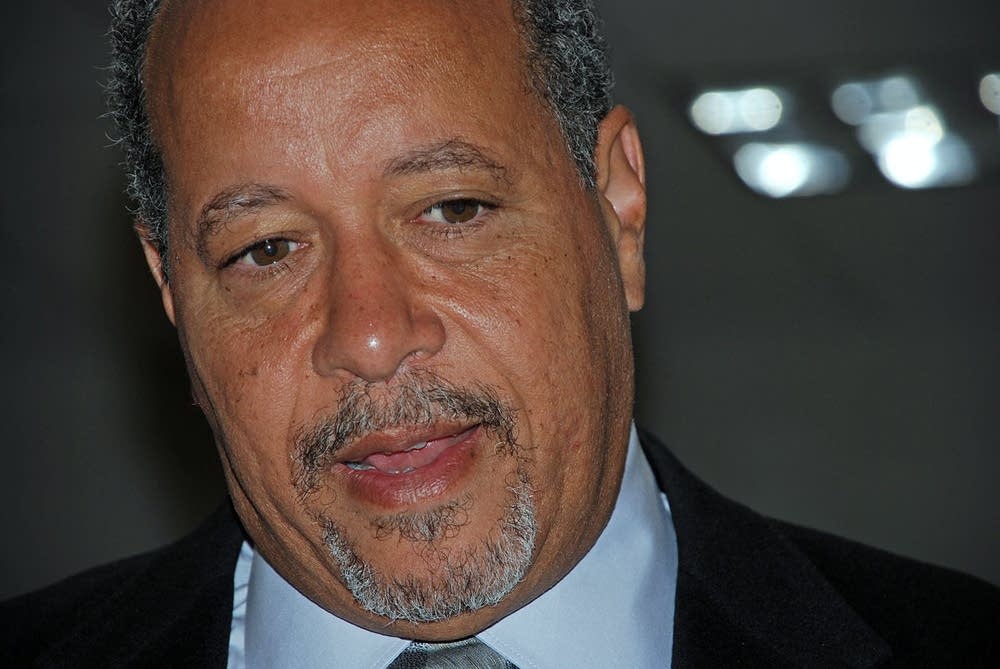
Peter Bell is chair of the Metropolitan Council, the lead agency for the Central Corridor LRT Project.
Comments (4)
Mr. Bell's response to Dr. Mulcahy seems measured and reasonable. Recall the provocative title of Dr. Mulcahy's piece:
"Since when is 'average' good enough for the U?"
This is the mother of all straw men arguments. No one ever said that the U should aim for average or for mediocrity. Some of us have called for the U to set a goal of being one of the best schools in the Big Ten - we've been called "doubters" by this administration. Can Dr. Mulcahy please explain why his old place of employment - the University of Wisconsin - consistently kicks our butt in things academic?
This is called, in chess parlance, the Lake Wobegon gambit. So tired, so old, so inappropriate.
We have work to do, Tim. Let's get on with it.
It's a bit surprising to see a scientist trust the word of a politician over that of a fellow scientist, but there you have it. Perhaps this stems from the fact that Gleason has traded his scientist's coat for a polemicist's baton, a baton he now brandishes oh-so-predictably and oh-so-tiresomely against U administrators, the top 3 goal, etc., etc., etc.
In this situation Gleason has utterly missed the point of Mulcahy, and the U's, argument. As I understand it that argument is:
1) sensitive equipment in our labs functions under current conditions
2) a committee of U faculty experts conducted an analysis and concluded that the mitigation measures proposed by the Met Council for both the construction and operational phases of the project are not satisfactory and will result in a significant, negative impact on research at the U
3) if the Met Council proceeds with its proposed measures and they are proven ' as the U expects ' to not work, it will be too late. Research in affected labs will have to be suspended or will be seriously disrupted; in either case, funding for that research will be withdrawn, presenting the very real possibility that the researchers who hold those grants will leave the U.
Perhaps I'm a more patient reader than Gleason, or perhaps I'm not blinded by any 'anti-top 3' perspective, but this is where Mulcahy's 'Lake Wobegon average' metaphor makes perfect sense. When the U starts losing top researchers and funding dollars, the slide down the slippery slope to being just an average university will be well underway, and it will be too late to do anything about it. Lord knows that T-Paw isn't willing, and in reality the state won't be financially able, to prevent that slide from happening.
That is why the Met Council's proposed mitigation strategy is such a risky gamble: it gambles with the public's investment in the U, it gambles with the future of the state's only research university, and it gambles with the quality of education U students will receive.
Gleason suggests elsewhere that the U come up with an estimate on what it will cost to move affected labs and to use that as a negotiating point with the Met Council. Why? Why take the most fiscally irresponsible approach? In any case, the number would likely be so high that it would sear the retinas of anyone who looked at it. It seems far more prudent, far more fiscally responsible, and far less risky to ensure that current conditions in labs are maintained.
Yes, the Met Council has a budget for the project ' I get that. But is it the U's fault that they failed to plan and budget properly? Why should the U be forced to pay the price for that failure?
Thank you for your comments Mr. Munny.
We obviously disagree on a lot of things.
I just wanted to point out that if the University had done what I suggested, and you blow off, namely spelling out the costs to them of mitigation - an eye-searing cost according to you - then they would be in a stronger position to negotiate.
Let's just say that real strategic thinking is needed here. And also go back and read my comments. One of the best Big Ten schools as a goal is hardly chopped liver.
But thanks for your discussion. More of it is needed.
Bill
It is extremely sad that the U, who should be supporting such development, is lacking behind and using precious dollars that could be better spent. Did the U take the same meditative steps when it constructed the new Student Union, the Weisman or other new buildings in and around the labs? Perhaps since the U likes to spend money it really doesn't have on things it may not need, they should just build new lab facilities else where on campus. The cost can't be the much and if it is, perhaps they could sell naming rights to the new lab ala TCF Stadium?
Post a comment
Please be civil, brief and relevant.
E-mail addresses are never displayed but they are required to confirm your comments. All comments are moderated. MPR reserves the right to edit any comments on this site and to read them on the air with attribution. Please read the Terms and Conditions before posting.
You must be 13 or over to submit information to Minnesota Public Radio. The information entered into this form will not be used to send unsolicited e-mail and will not be sold to a third party. For more information see Terms and Conditions and Privacy Policy.