


Self portraits in the Facebook age
Go Deeper.
Create an account or log in to save stories.
Like this?
Thanks for liking this story! We have added it to a list of your favorite stories.


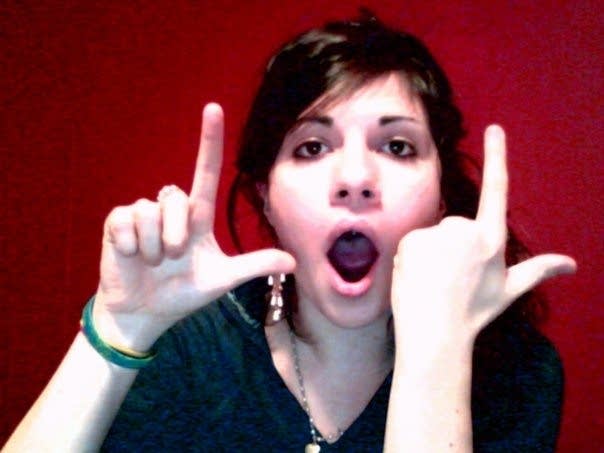
Admit it. At least once, and probably more, you've picked up a camera, turned it towards yourself, held it at arms length and pressed the shutter.
With digital, if you hate it, you just press delete, and if you love it, you can get it printed, or e-mail it to the family, or even post it on-line for all your pals to see.
It's kind of irresistible.
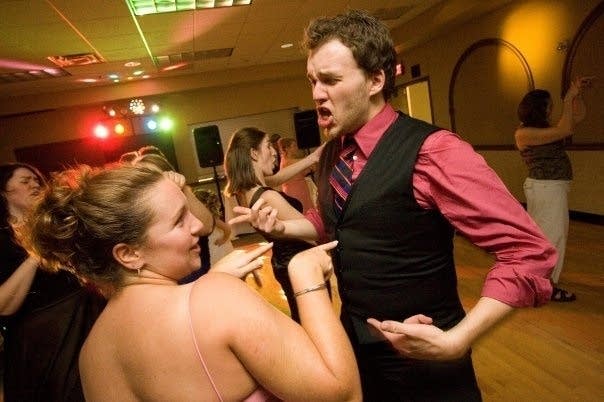
And the University of Minnesota's Karal Anne Marling knows why. She remembers years ago scrambling down into the Lascaux caves in France. The caves are famous for their paintings of animals. But she saw something else there that moved her more.
Turn Up Your Support
MPR News helps you turn down the noise and build shared understanding. Turn up your support for this public resource and keep trusted journalism accessible to all.
"The people who painted the caves, and the people who came there subsequently to use their power would fill their mouths with ochre pigment and then put their hand on the walls of the cave as a sacred place, and blow," she said.
Marling says that self-image left on the wall, an outline of a hand still visible thousands of years later, must have been immensely powerful to these early people.
"Like subsequent graffiti on walls it was a method of self-assertion," she said. "'I've been here! This is me, this human being. I existed, pay attention to me.'"
As the centuries passed and painting became more sophisticated, so did the self-portrait. Many of the old masters did mirror paintings, a process which Marling says is not as simple as it seems.
"It's very complicated indeed," she said. "You first have to decide as an actor puts on make-up I suppose, how you want to represent yourself for posterity. How should you be, and are you really what you see in that mirror?"

A self portrait in oils could take weeks, months, even years. Photography made self-portraiture much easier to do. Then came the Internet, and Myspace and Facebook, the social networking sites where people can post pictures of themselves.
"If social networking online was a game, this would kind of be like your piece, your profile pic would be your piece that you move around," said Kristen Dillon, a freshman at the University of Minnesota.
Sitting on a corridor at the Coffman Memorial Union she said she got her first camera in the fifth grade, and her first digital camera in tenth grade. She took many of the pictures in her high school year book, and even today, she rarely leaves the house without a camera in her bag.
Dillon recently wrote a paper about self-portraiture in the Facebook age. She said by posting multiple pictures of themselves, and by digitally editing those images, people can project a multi-layered self-portrait to the world.
"Having that control over your representation and image and just like the good feeling of having people see that and affirm that, as shameful as it is sometimes, it's a really good feeling sometimes," she laughed. Dillon admits there are downsides though.
"People spend more time creating how they want their life to look as opposed to just living their life," she said. "I've seen - I've done this too, I won't lie - I've seen a lot of kids take ten picture of themselves in the same until they are all happy with it. I mean why? I mean this takes 20 minutes."
The appearance of having fun sometimes trumps really having fun Dillon said.

There are people who see self-portraiture very differently.
Twin Cities photographer Russell Joslin works almost exclusively with self-portraits. He has a show currently open at the Umber Studios in Minneapolis.
He is a striking guy: tall with a shaved head who can look a little menacing in his pictures.
Joslin said he began making self-portraits in art school, in part because he couldn't afford to hire models. Now he enjoys working alone. To make his images he has to start the camera timer and then dash into position. As he still uses film, it will be hours, and maybe days, until he sees whether he has a good image.
"There are a lot of times when things don't work out, and yeah, it is frustrating, but like I say, that's part of the what I enjoy about it is that frustration or lack of perfection," he said.
What's striking about Joslin's work is you rarely see his face in these pictures. Quite often it's obscured by a flower, or another object. He poses in old buildings or out in the woods. Sometimes you just see his hand, or in one case his ear.
Joslin runs an international photography magazine called "Shots" and sees a lot of photography as a result. He said in art photography, people working in self-portraiture are often looking to convey an idea or a theme, rather than taking a picture of themselves.
"I know a lot of people who do self-portraits who talk about themselves within the image as if they are talking about somebody else," he said.
Back at the University of Minnesota Karal Ann Marling is philosophical about this fascination with self-portraiture. She says even as people try to project a distinctive even glamorous image, she's struck by how it all looks the same.
"There is this desire to emulate celebrity, and what a celebrity is, is to be pictorially available at all moments," she said.
Submit your own self-portrait
Do you have a self-portrait. Submit it to Minnesota Public Radio, and we will post them on our Web site. Click to submit your self-portrait.


Dear reader,
Your voice matters. And we want to hear it.
Will you help shape the future of Minnesota Public Radio by taking our short Listener Survey?
It only takes a few minutes, and your input helps us serve you better—whether it’s news, culture, or the conversations that matter most to Minnesotans.


