Lowering barriers to a reliable car
[image]
A big barrier to finding and keeping a job can be the ability to get to it.
And while public transit can be an answer for some low-income people, in outstate Minnesota the overwhelming majority need to solve the problem with a car.
Enter the "car guy," Dan Jones.
Create a More Connected Minnesota
MPR News is your trusted resource for the news you need. With your support, MPR News brings accessible, courageous journalism and authentic conversation to everyone - free of paywalls and barriers. Your gift makes a difference.
Jones runs a non-profit program called Wheel Get There, designed to help low-income people get where they need to go by selling cheap wheels he acquires for free. In the past five years, he's sold more than 800 cars this way.
The idea of the program, which operates under the jurisdiction of the Minnesota Valley Action Council, is simple. Take donated cars that are still running and sell them to low income people. The donor gets a tax deduction and the buyer gets affordable transportation.
Take donated cars that are still running and sell them to low income people
Jones said his goal is to improve lives, but it's easy to see that he also just likes cars.
"Here we have the Holy Grail of donated cars, the '97 Buick Le Sabre," Jones said, walking through the parking lot of the social service agency that administers the program.
Jones studied auto mechanics in vocational school in the late seventies, and he's never lost the drive to learn about as many cars as possible.
He's already taken the LeSabre on a test drive and he's thinking it will be a good, cheap car for someone.
"I couldn't find anything wrong with it. It's not leaking, it's not making noises, all the windows work, the doors work, the air conditioning works, the cruise control works. It's really been well-maintained."
The car's book value is about $2,300. He'd be happy to part with it for $1,000 to a qualifying buyer. That means, if you have a family of four, you have to make less than $46,100 a year.
The Better Business Bureau gives the program an A+ rating. Jones is so committed to the concept that he stays in his office until midnight on Dec. 31 so people can make a last minute donation and get the tax break.
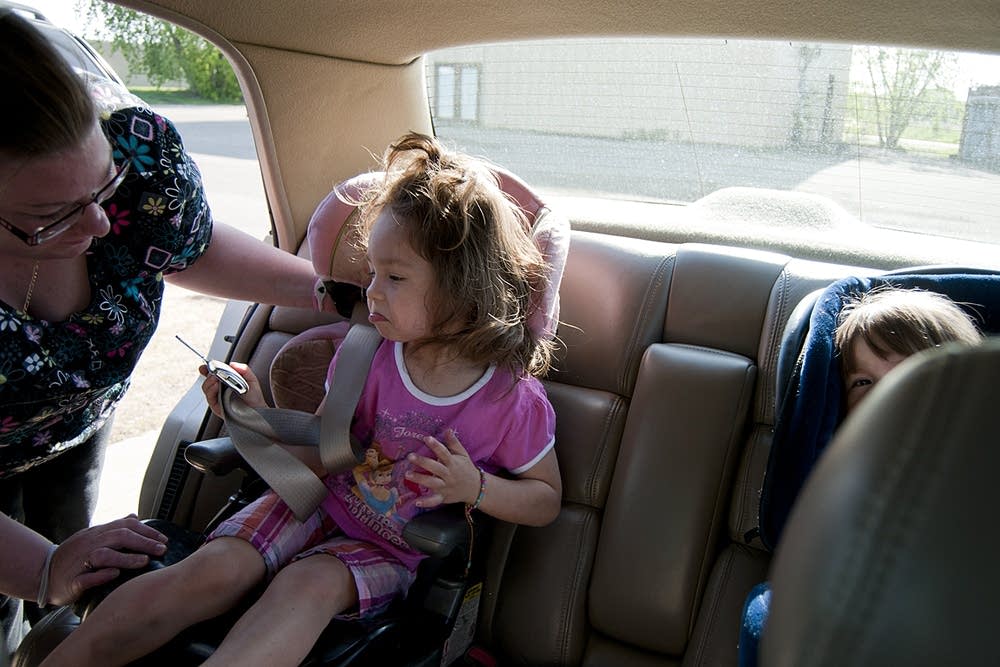
"You absolutely need transportation in this area of the state to get back and forth to work," said Jones. "And we do have public transit here in Mankato. That works for a few people but not everybody. Most people need a car to survive."
That's something social service providers have found true across the state. Unreliable transportation is an issue for about a quarter of the state's population, said Arnie Anderson, director of the Minnesota Community Action Partnership.
"On the low end of the economy a lot of people can't afford to go to work," said Anderson. "It's a horrible trap, it's a horrible paradox."
That was the problem for Mark Murphy, a factory worker who became one of Jones' customers.
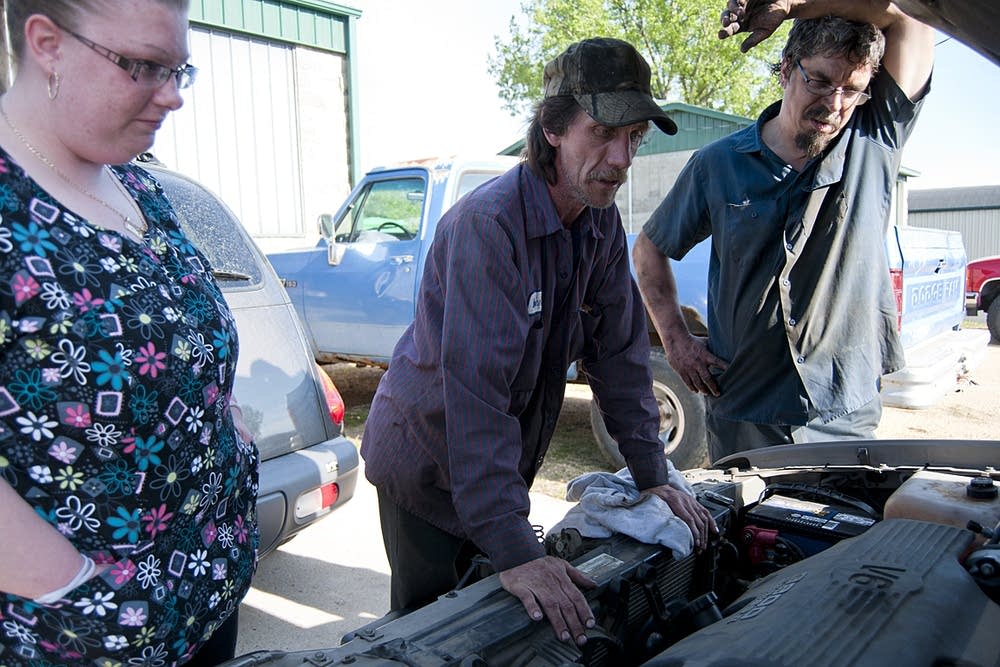
"I live in St. Peter and I work in Mankato which is 12 miles away," says Murphy. "So I had to pick the jobs that I could get to with a ride. Primarily from my girlfriend."
Murphy said he had a factory job when he was offered a better opportunity about a month ago at a recycling center. But the hours didn't match his girlfriends' schedule, so the transportation issue quickly became a roadblock.
Then he discovered the cars for low incomes program.
"The timing was just perfect because Dan had this car available right when I had to make that decision," says Murphy. "So it was a no-brainer."
"It's a '94 Mercury Sable, which sounds old. It's 18 years old," Murphy said. "But it drives like a champ."
Murphy, who drives it to his new job at the recycling center every day, had to pay $400 in cash for it.
That's a key point.
Social service agencies around the state offer a wide variety of vehicle assistance programs, Anderson said.
"We work with loans, we help with repairs, sometimes we'll help with getting car insurance or license tabs," said Anderson.
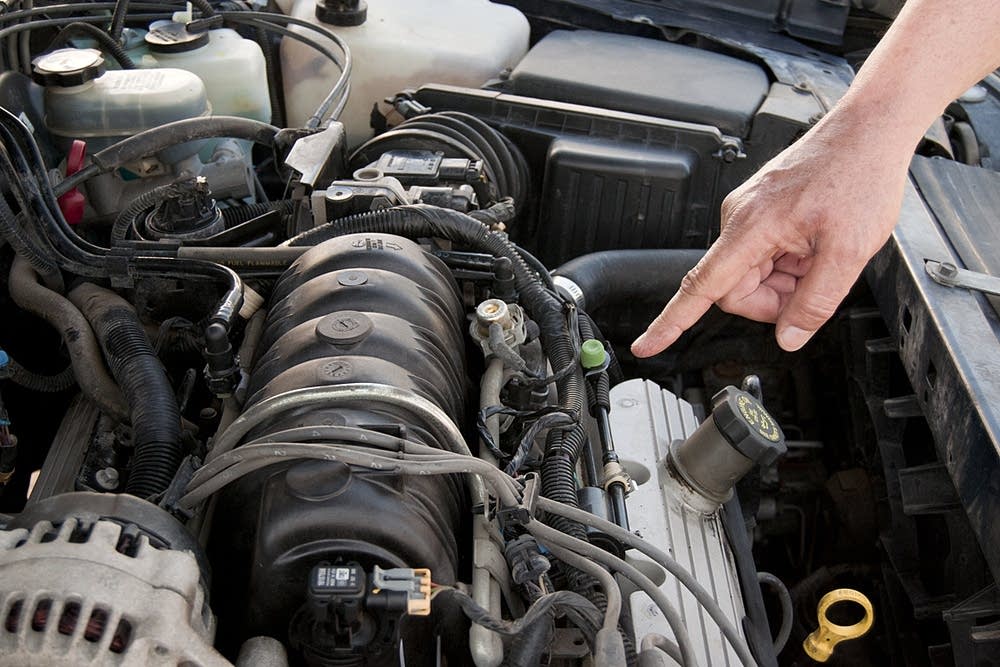
But helping someone buy a car is the gold standard of getting people work- related transportation, he said.
Jones said helping low income Minnesotans get cheap transportation has taught him a lot about financing, and now he only accepts cash for most of the cars he sells.
"After 11 years of doing this I'm convinced that debt is bad for people and it's particularly bad for low income people," said Jones.
Jones said he's had to take back too many cars because clients fell behind on monthly payments. They weren't a loss for him, because he got the cars for free. But clients lost a car they'd depended on, and that defeated the program's purpose.


