Property owners frustrated by power grid update

A massive power grid update under construction through the state is causing consternation for some homeowners in its path.
The CapX2020 project is designed for more efficient electricity use, and to improve delivery to the places it's needed. Xcel and their partners plan to flip the switch on the stretch that runs from Monticello to St. Cloud this month.
Few dispute the need for the project. But some affected property owners are frustrated with how they've been treated by the utility companies behind the project.
Rick Weiman owns a home in the middle of 20 acres in Stearns County. Soon he'll be able to see a 150-foot power line from his kitchen table.
Create a More Connected Minnesota
MPR News is your trusted resource for the news you need. With your support, MPR News brings accessible, courageous journalism and authentic conversation to everyone - free of paywalls and barriers. Your gift makes a difference.
"It's going down the whole south boarder of the property, taking out about an acre and an eighth of mature oaks along there."
Walking through the densely-wooded property, Weiman points out the pond where he says wood ducks and frogs congregate during the summer. Soon, a utility tower will stand at one end of it.
Weiman gestures toward some of the trees that will be cut down. He pauses at one that he guesses is close to 250 years old.
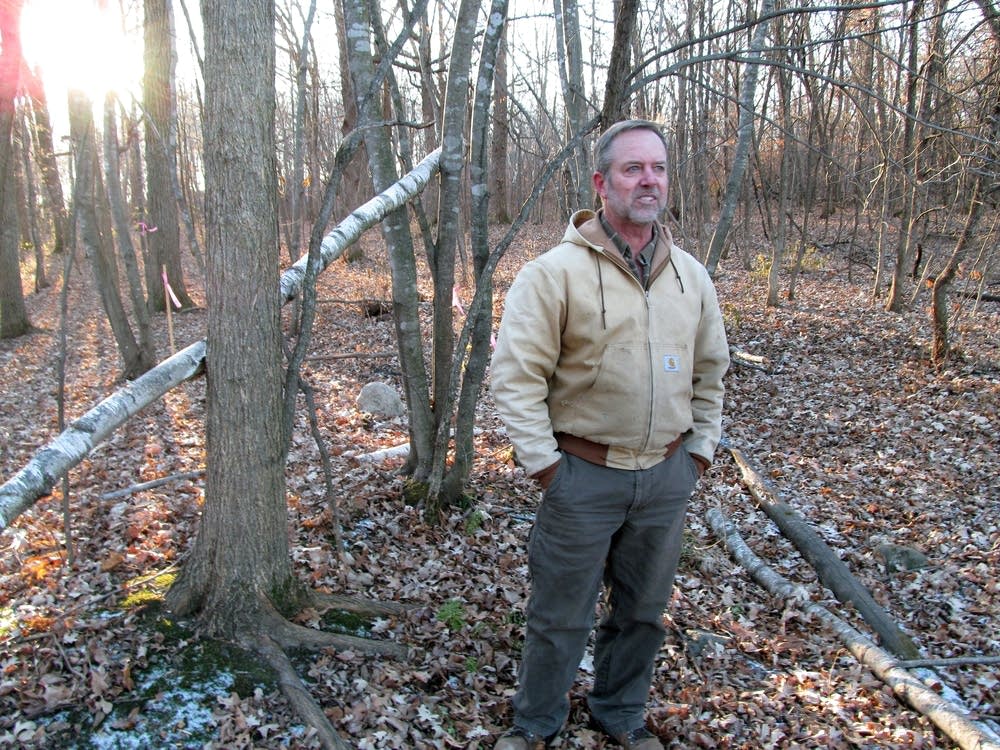
"It's going to go away. It's going to be cut down. Kind of a bummer. It stood the test of time," Weiman said.
The CapX2020 project has offered to pay him $7,636 for the 1⅛ acres it needs. The figure is based on the average price of land sold in the area as well as a potential loss in property value.
But it's not a fair price, Weiman said. Lawyers and a real estate agent have told Weiman that his property value will drop between 25 and 30 percent, so he's trying to get the project to pay a figure closer to what he might lose.
"They try and nickel and dime and low ball everybody along the way," Weiman said.
There are some who would be glad to trade places with Weimann.
Scott and Belinda Welsh live a half-mile away. In the house Scott grew up, he now lives with his wife, mother and four kids.
"I was brought home from the hospital here. This is where I grew up," he said.
Last June, a letter from Xcel Energy indicated the final route for the power lines crossed the Welsh's property. They could either be compensated for the land the project would need, or sell their home to CapX.

But three months later, the family was told that rather than being on their property, the power line would run just outside. A representative from Xcel told the family they were not going to be directly affected, so no easement would be needed.
"I said how am I not affected? The power lines still going to be there, the lines are going to be there, all the negative effects, health effects, property values, everything like that," Welsh said. "And he said, 'Well, from just our point of view, you're unaffected.'"
Under Minnesota law, only property owners directly affected have compensation rights, meaning folks like the Welsh's are out of luck.
Legal battles like these aren't unusual. There are likely to be more of them than the state has seen since the last major grid update in the 1970s.
When completed in 2015, about 700 miles of power lines will run through the region, affecting hundreds of property owners.
Laws of eminent domain typically only apply to those who are losing property, said Scott Hempling, an attorney and former executive director of the National Regulatory Research Institute, an organization that advises on utility regulation.
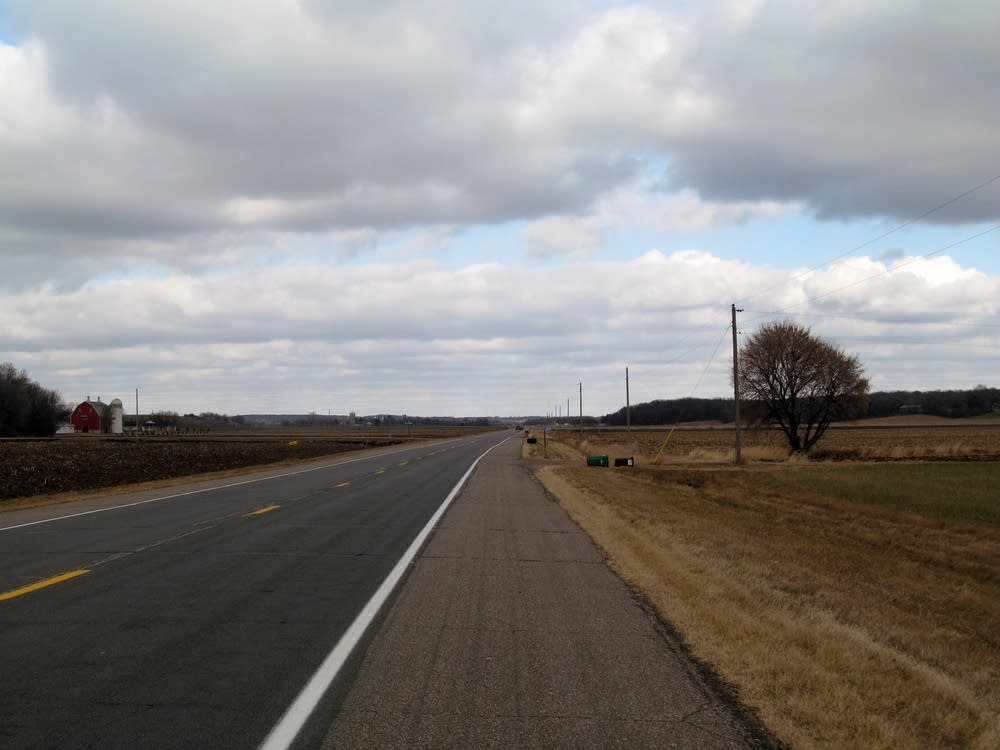
"Sending electromagnetic waves from next door or creating a lot of noise next door... that's not taking somebody's property away, it's spoiling their day and reducing potentially the value of their lifestyle," Hempling said. "But that's not normally what's compensated in eminent domain."
Hempling adds that when it comes to compensating homeowners for the land taken by utilities, the companies have a responsibility to the public to do it as cheaply as possible.
"That means when it goes to a particular homeowner, it's got that obligation. And all the sympathy in the world for what it's doing to a particular person is not going to induce the utility to pay more than it needs to or than it should," Hempling said.
Darrin Lahr manages the permitting process along the power line's route. He acknowledges that no one wants to see a major power line cut through or skirt their property.
"Building a transmission line has impacts. We never pretend that it doesn't have impacts... It is just the nature of the building of infrastructure," Lahr said.

