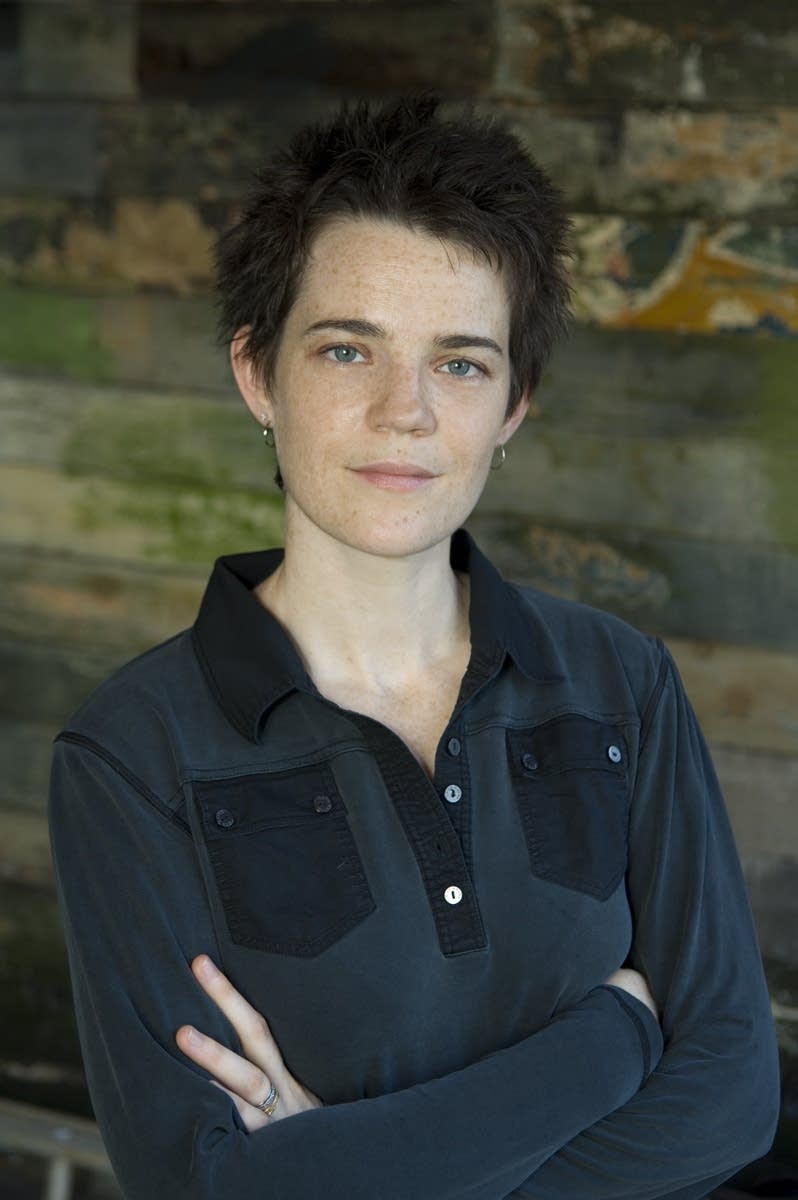
Photo: #Haddayr Copley-Woods lives in Minneapolis and is a writer, blogger and mother.

Commentary

What if impaired mobility didn't bring increased isolation?
by Haddayr Copley-Woods
April 7, 2010

I read an account in the paper recently that made me cry. And then it made me furious.

It was a story about Don Langland, a 79-year-old warmly loved and deeply religious man from Pequot Lakes, Minn., who duct-taped a shotgun to his crutch and killed himself.

The article described, in vivid and pitying detail, his failing eyesight. His loss of coordination. His shuffling gait. How a once active and vigorous master carpenter who kept entire blueprints in his head was embarrassed by bouts of confusion and spent most of his time inside, in front of the T.V.

Elder suicide rates are rising, and experts are trotting out the same suggestions for tackling the problem they always do: recognizing and treating depression. Delaying the onset of disabling illnesses.

These are fine ideas, in and of themselves. But they address the symptoms of the problem -- not the problem itself.

The problem is isolation, dependence and stigma. If you were facing these issues after a long life of independence and easy social acceptance, you'd be depressed, too.

There's this nod that disabled people often exchange when we see each other on the street. The nod says: Here is a look that does not see you as freakish or frightening or sad. Here is a greeting that acknowledges we are in this together. Here is a nod that says: I noticed you, and both of us know how damn heavy the doors at the end of this skyway are, even if nobody else does. Some call it, with pride, "The Cripple Nod."

There are some people who do not return the Cripple Nod. Some are busy and not paying attention. Some truly do not see what they might have in common with me. And some, sadly, are ashamed to be associated with another disabled person.

And I've noticed a demographic truism that is so dependable I have nearly given up trying: Elderly disabled people, overwhelmingly, do not return the nod. They see me coming and look determinedly away. I am not like her, their stances say. The exceptions to this rule are rare.

But what if disability did not inexorably lead to isolation, dependence, and a nursing home? What if, when the time came for mobility devices, we had affordable, stylish choices? What if we saw them in use around us every day, among people of all ages? What if, most important, disability did not mean loss of work and income, because every workplace was accessible and every job provided a living wage?

What if failing eyesight or legs did not automatically mean an inability to travel alone, because we had excellent, accessible public transportation? What if there was no shame in public bouts of memory loss?

What if dementia or severe mobility impairment did not mean a nursing home or days at a time with nothing to do but watch TV? What if it meant a dedicated, professional staff in your own home and paid leave for your loved ones to look after you? What if you had access to safe, enjoyable outdoor exercise every day, and stimulating, pleasant company?

What if there were no dirty, judgmental looks thrown at people in motorized scooters?

I keep thinking about Langland's horrifying last use for his crutch. Crutches, despite common negative nomenclature, are for me a device to lift me up. To make me strong and fast. To give me independence. He, heartbreakingly, couldn't see it that way.

I want to live in a world where he could have.

----

Haddayr Copley-Woods, Minneapolis, is a copywriter, blogger and mother.

Comments (19)

Beautifully said. When working in the field of disability inclusion was often confronted with the fact that accessability had improved over the years but accessibility without a suitable, welcoming destination remained meaningless.

Posted by Sieglinde Gassman from St Paul, MN | April 7, 2010 11:11 AM


When you write about these things, I get this vision of a world in which, instead of everything catering to a narrow range of "norm", there's more room for people of all ages and physical abilities to be included and respected as valued and useful members of society. It's a really beautiful vision of a much better world. Thank you for making me think.

Posted by Karen LaMancha from Madison, WI | April 7, 2010 3:16 PM


Thank you for these profound words. I want to live in that world too.

Posted by MG Ellington from Greensboro, NC | April 7, 2010 3:40 PM


Thank you for the wonderful and moving post. I truly understand having been on both sides of the fence.

Posted by Amanda Heroman from Baton Rouge, LA | April 7, 2010 3:48 PM


Well said! This is such an important issue and I am glad MPR has someone discussing it.

Posted by Caoimhe Snow from Tucson, AZ | April 7, 2010 3:55 PM


Thank you for this. It's important to remember that "disability" occurs at the intersection of the individual and society, and that no barrier is inevitable -- whether stairs ...or stares.

Posted by Ann Magill from Chesapeake, VA | April 7, 2010 4:34 PM


Well said! I'm glad someone like you is out there saying these things now, because I keep getting older, and there could easily come a day when I need the crutches or the wheelchair myself.

Posted by Laramie Sasseville from St Paul, MN | April 7, 2010 4:58 PM


Beautifully written. I look forward to living in that world and working with others to make it better. Thank you.

Posted by Michelle Zilisch from Cedar Rapids, IA | April 7, 2010 6:36 PM


Well said and beautifully articulated. We have to be able to see and imagine that world to get there, so stating how it should be, clearly and with details, is so important. Thank you.

Posted by Katherine Sparrow from CA | April 7, 2010 7:14 PM


Here here! This is an excellent article - it's so easy to see something like this as tragically inevitable, when it is nothing of the sort.

Posted by J. W. from TX | April 7, 2010 8:02 PM


So very true. So many barriers are taken for granted in our society; it's hard to change how things are when they are so easily unseen.

Thank you for shedding light on this totally unnecessary dehumanization of those with disabilities. May it lead to increased awareness and possibilities.

Posted by Rachel Heslin from Big Bear City, CA | April 7, 2010 9:46 PM


Beautiful article and you are absolutely right. I think part of it is that many people would rather find a quick fix to a problem instead of approach another human being with compassion. It is easier to declare the Langland's of the world depressed and in need of medication than to change attitudes so that they and the people around them know that they are still valued and loved human beings

Posted by Thom Marrion from Seattle, WA | April 8, 2010 1:39 AM


BRAVO! I think I'm one of those rare people an elderly disabled person "sees". I had a stroke when I was 17 years old, I am not 55. The elderly are ignored, especially when disabled. Most of it is due to lack of knowledge about the disability for society in general and, therefore, makes "able-bodied" people fell ill at ease, thus causing them to turn away. Moreover, in most cases, a young disabled person's experiences are much different than that of an elderly person. Sorry but they are.

Posted by Glynis Jolly from Crossville, TN | April 8, 2010 6:16 AM


Inclusion should be the rule, not the exception. Thank you, Haddayr, for your moving reminder.

Posted by Susan Berkson from MN | April 8, 2010 8:36 AM


Even as a young disabled person, the heart of this article rings true for me. I have gone from being a person with lots of friends and a busy social calendar to one who considers which is worse - death, or a lifetime of watching reality tv!

But seriously, if you know someone whose mobility is limited, please take the effort to reach out to them, because they can't come to you.

Posted by Heidi Johnson from Minneapolis, MN | April 8, 2010 1:38 PM


Heidi:
If you had the proper equipment and accessible, convenient transportation, you wouldn't HAVE to hope that friends would reach out to you; you could visit them yourself. That's the world I want to live in.

Posted by Haddayr Copley-Woods from Minneapolis, MN | April 8, 2010 1:55 PM


Thank you for sharing this; it's an incredibly important topic for everyone in this country. And it should be part of the mandatory discussions between any Doctor or Caregiver and a Patient w/ Disabilities and/or their families. We need to do better for our parents, our grandparents, and ultimately ourselves.

Posted by Kim A from Los Angeles, CA | April 8, 2010 8:48 PM


Thanks for not only giving me the crip nod, but also coming over and saying hi to me, and complimenting my awesome crutches. I never forgot that, and even still, it makes me happy that someone noticed how much effort I put into finding 'cool' ones! Glad I stumbled across this; mentioning it in my twitter feed. Hope all is well, and you're getting plenty of nummy Irish food! -S

Posted by Sara OneHotProcessor from Minneapolis, MN | April 11, 2010 7:51 PM


What an inspiring, thoughtful, and important perspective! You have opened wide what so many of us prefer to narrowly construe--whether out of ignorance or fear-- as "the problems of the disabled." Thank you.

Posted by C. C. from Branford, FL | April 18, 2010 11:03 AM


Post a comment

Please be civil, brief and relevant.

E-mail addresses are never displayed but they are required to confirm your comments. All comments are moderated. MPR reserves the right to edit any comments on this site and to read them on the air with attribution. Please read the Comment Guidelines before posting.

Inform our coverage and become a source in the Public Insight Network.

* indicates required field

*
*
*
 

characters remaining!"

You must be 13 or over to submit information to Minnesota Public Radio. The information entered into this form will not be used to send unsolicited e-mail and will not be sold to a third party. For more information see Terms and Conditions and Privacy Policy.

Latest News & Features


News Cut

with Bob Collins