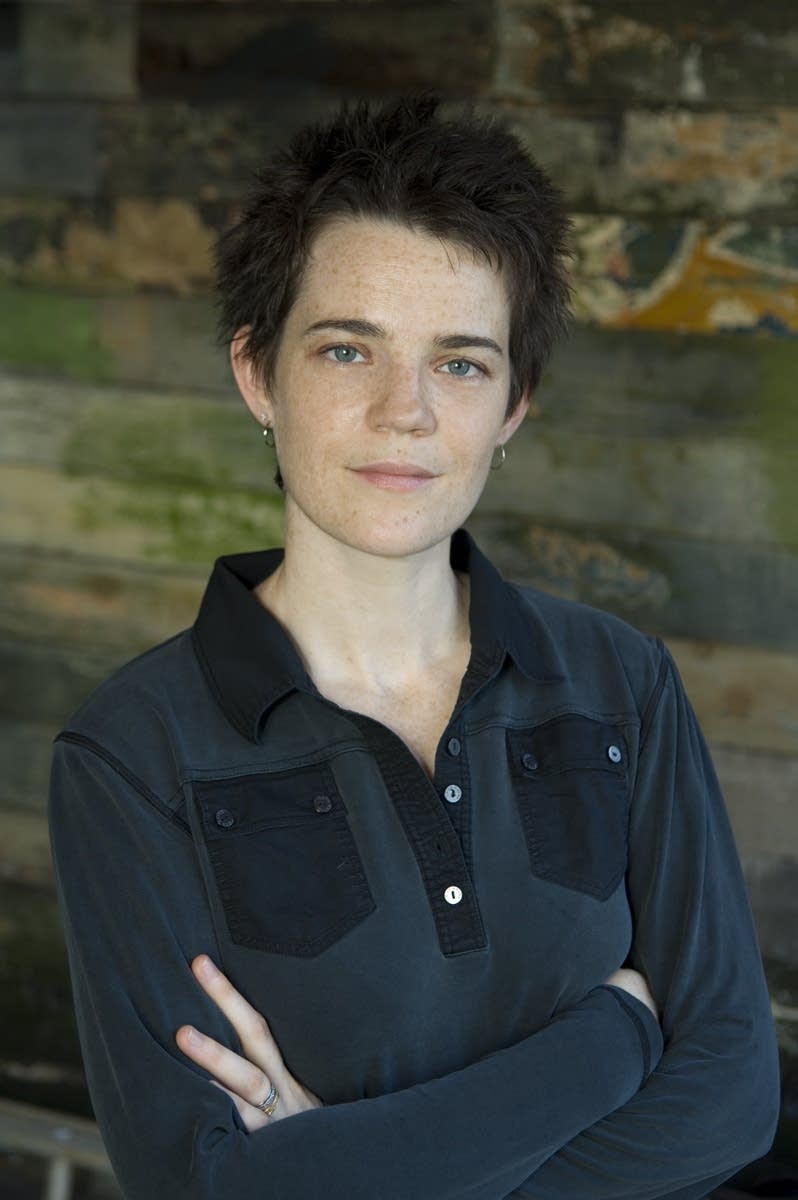
Photo: #Haddayr Copley-Woods lives in Minneapolis and is a writer, blogger and mother.

Commentary

Don't look for the facts about vaccines to change beliefs
February 16, 2010

By Haddayr Copley-Woods

When my oldest son was 3 years old, he stepped into my boots and slung my breast pump over his shoulder.

"Where are you going?" I asked him as he headed for the door.

"Work!" he said. "I'm a mommy!"

"Daddies work, too," I told him.

He scowled at me for this obvious falsehood. "No," he said patiently. "Daddies work at home, taking care of us. Mommies work at a job."

"No, really," I said. "Some Daddies work at jobs, too. As a matter of fact, most do."

My son flat-out refused to believe it, and he became quite angry with me for telling him the truth.

People are irrational creatures. We believe what we believe, and evidence to the contrary angers us rather than changing our minds. This phenomenon is described by a group of researchers from Northwestern University, UNC Chapel Hill, SUNY Buffalo and Millsaps College as "motivated reasoning." Because we suffer from uncomfortable cognitive dissonance when we hear information that conflicts with our existing beliefs, we cling even more tightly to our original opinion. We selectively seek out what we can to support our opinion and ignore everything else, even if our opinion relies on shaky logic and suspect data.

My first commentary on MPRNewsQ was about the ways that media report science, and it touched on various topics, including the erroneous connection between vaccines and autism. I received a huge pile of comments on this article. Many of them were from anti-vaccination activists who were doing this "motivated reasoning," linking to flawed papers and ignoring the 20 solidly built, peer reviewed studies that show no link. The responses online and to my personal e-mail address were passionate, and many were incredibly hostile: One woman called me hateful, another expressed the wish that her unvaccinated children might make mine sick.

This phenomenon, and my personal experience with it, is why the recent news hasn't excited me like it should. Yes, The General Medical Council, Britain's medical regulator, has rebuked Dr. Andrew Wakefield -- the doctor who started the incorrect rumor that autism and the MMR vaccine are linked -- for unethical and irresponsible practices. (Among other things, he did not randomize his data, nor did he disclose that he had taken money from anti-vaccination groups.) The Lancet, one of the most reputable medical journals in the world, has retracted the paper in which he made the erroneous link. The Lancet pretty much never retracts papers. This is a big, big deal.

But I am not sure how many minds will change. His supporters will accuse Big Pharma of silencing him through conspiracy. And if you are the sort of person who genuinely believes your kids' immune system will successfully fight off polio without a vaccine, these sorts of revelations are hardly going to make an impact on your opinion.

My only hope is that this censure will influence people who have not yet made up their minds: people who quite rightly distrust the pharmaceutical industry (remember thalidomide?), but who also understand that rumors started by flawed and possibly falsified studies are just that: rumors. My fear is that the damage has already been done: to our herd immunity, but also to the hearts and minds of people who have just decided to believe the doctor, and their extremely subjective personal experiences, instead of the facts.

----

Haddayr Copley-Woods, Minneapolis, is a copywriter, blogger and mother.

Comments (11)

Thank you for this. I had not heard of the term "motivated reasoning" but it exactly what we see in the anti-vaccine movement. It's too late to convince those who have made up their minds that vaccines are the devil's handiwork, but let's hope the information available to new parents today is sufficient to educate them so they don't get suckered into it too.

Posted by Lisa R from St. Paul, MN | February 16, 2010 11:20 AM


Great article-- glad to see this topic still in the news. Wired magazine recently did a great article on the anti-vaccination issue: http://www.wired.com/magazine/2009/10/ff_waronscience/

Posted by Christine McCann from Edina, MN | February 16, 2010 11:41 AM


There is large group in the recent generation of parents that have accepted "vaccines cause autism". I agree, few will change their minds.

It is the next generation where the change may have effect. The parents in the 2010's years won't have to hear Wakefield presented as a credible scientist.

We can hope for a better future.

Posted by LBRB Sullivan from CA | February 16, 2010 11:58 AM


I am afraid Hddyrr Copley-Williams article contains many misguided statements. The British General Medical Council got away with a hatchet job on Andrew Wakefield that they will regret in the future.

Wakefield did not claim that MMR causes autism he said that the links he found needed further research. He was actually looking into Crohns and autism.
His work was well flagged up in September 1996 in a big selling Sunday newspaper that described exactly the nature of his work with autistic individuals and their charitable funding. The medical establishment have treated Wakefield disgracefully and one day they will have to explain why the dearth of unvaccinated autistic people in the population did not alert them to the link with vaccines. I would like that day to come sooner and that is what I will work for.
Tony Bateson, Oxford, UK

Posted by Tony Bateson from Oxford | February 16, 2010 12:10 PM


Wait, so you are saying antivaxxers behave like 3 year olds?

I totally agree.

Posted by Robert Hirsch | February 16, 2010 12:15 PM


Sorry, but I believe the term is 'vaccine safety advocates'..and until you can point me to a 'peer-reviewed' study with a clean, never-vaccinated control group with which to compare outcomes, I don't think the 'PRO VACCINE AT ANY COST - even if I have to stick my head in the sand to ignore the 1 in 100 kids with austim' camp has a whole lot to say on the issue.

Posted by Sarah Jones from New York, NY | February 16, 2010 3:31 PM


And now let's watch the "motivated reasoning" play out in the comments, exactly as you predicted.

Posted by Phil Lafornara from Seattle, WA | February 16, 2010 3:51 PM


A great follow up to your first article, very classy.

Posted by Lila Schow from Arvada, CO | February 16, 2010 4:16 PM


An excellent article. My wife and I have an autistic son and we fully support you. I see that some "motivated reasoners" have already responded. Expect a lot more.

To the vaccine safety advocates like Sarah I ask, "What do you suggest people should do about the existing vaccine schedule? Is it safer than the diseases it protects against? Is it better than doing nothing?" Oh and please do not invoke autism in your answer unless you have some credible science to support you.

Tony Bateson is a true believer. Wakefield's research into Crohn's disease and measles was discredited before he started on autism. The Lancet insisted that he remove references to MMR causing autism before they would publish his paper. Then he reneged and restated his claim at a press conference. Wakefield's research was always about MMR. N0w that has been discredited he is going after Heb B and thiomersal. He is an anti vaccine chancer, nothing more and nothing less.

Posted by Mike Stanton from Barrow-in-Furness | February 16, 2010 5:00 PM


Haddayr.

I think the facts will change beliefs. What else will in the end ?

As you point out, herd immunity is weakining and vaccine-preventable diseases are on the rise. Witness the meassles outbreaks in 2008 and the current mumps outbreak in NY and NJ.

However, I think the problem goes a little deeper in society than the "anti-vaccine" movement. For example, a recent University of Michigan poll that found that parents were more concerned about the safety of H1N1 vaccines (66%) than were worried about their children getting infected with H1N1 (55%).

Misinformation is alive and flourishing on the Internet, and much of it goes answered.

This suggest a vigorous two-way dialogue is needed on issues of vaccine safety and vaccine additives. A one-sided public communications campaign probably will not make full headway.


Influenza Monitor
http:// influenzamonitor.com
http://twitter.com/influenzamon

Posted by Ed (Editor) | February 17, 2010 3:32 AM


I personally think that vaccines are safe on their own, but when combined together they are not safe. I do not know if anyone did studies to see if combining vaccines or taking more than one vaccine at the same time is safe? When I hear a story that says a kid became autistic after taking 3 vaccines at the same time to catch up on his/her immunization schedule, I do not ask whether vaccines are safe, but I do ask is it safe to administer more than one vaccine all at once?

When our body gets attacked by a virus or a germ it usually is fighting just one thing at a time. You never see someone get chicken pox and measles and rubella at the same time. So, my question becomes, doesn't the body get confused or overwhelmed when all these three things attack it at the same time?

Can anyone direct me to any study that says combining vaccines or taking 2 or more vaccines is safe?

Posted by Jemma B from WA | March 16, 2010 11:54 AM


Post a comment

Please be civil, brief and relevant.

E-mail addresses are never displayed but they are required to confirm your comments. All comments are moderated. MPR reserves the right to edit any comments on this site and to read them on the air with attribution. Please read the Comment Guidelines before posting.

Inform our coverage and become a source in the Public Insight Network.

* indicates required field

*
*
*
 

characters remaining!"

You must be 13 or over to submit information to Minnesota Public Radio. The information entered into this form will not be used to send unsolicited e-mail and will not be sold to a third party. For more information see Terms and Conditions and Privacy Policy.

Latest News & Features


News Cut

with Bob Collins