In 2001, I stood in the balcony of a St. Paul Lutheran church as the Rev. Anita C. Hill was ordained in an act of ecclesiastical disobedience. Standing there with my little video camera, with mainstream media on either side, elbowing for a view of the packed church, I fought back tears.
I needed to get this shot for my documentary film, "THIS obedience," directed with Jamie A. Lee. Hill was my pastor, openly lesbian and in a committed relationship, which meant that her ordination would prompt official church sanctions against our congregation.
The rules of the Evangelical Lutheran Church in America state that pastors must refrain from "homosexual sexual relationships," while their straight counterparts may enjoy the support and love of a lifelong partnership.
I have made other films, but screenings of this one often lead me to weep publicly during audience Q&As.
Today, more than eight years later, I prepare to set up my camera at the Minneapolis Convention Center, where the ELCA has gathered again to debate the fate of my pastor's call and the future of one of the country's largest Christian denominations.
I watch nervously as groups from both sides of this issue scurry about, preparing for the structured chaos of floor debate, tethered by Robert's Rules.
Lutherans believe that congregations have the final say in decisions about whom to call as pastors, rather than having to defer to the opinions of powerful clergy leadership.
That said, this measured democracy comes at the price of generations of potential members and clergy who silently leave because the denomination sees their lives, or the lives of people they love (family, friends, etc.) as an issue to debate instead of bless.
What's my stake in this? I was raised Conservative Fundamentalist Baptist and had run from organized religion since my early 20s, largely due to the rejection I felt within a faith that erred on the side of rigid doctrine instead of focusing on grace and love. This division was particularly painful for me, as my Christian faith was the lens through which I first viewed the world.
As a Christian, I was raised to believe that my relationship with God (which at that point was housed in a Baptist church building) was more important than any relationship I had on this earth with friends, family, lovers or myself.
Yet as I discovered myself to be bisexual, the faith that had been my strength began to tear me apart. It was like God himself was rejecting me.
Beyond the debate over scripture (which has divided biblical scholars on all sides), I have come to believe that God loves me and that my sexuality is a gift. I have also become a member of the Lutheran Church (some find this ironic, but my new church is more liberal than the one I left).
Part of this journey was influenced by making "THIS obedience," which was broadcast across the United States on public television. The film ends with the Lutherans deciding that they needed to "study" homosexuals for a few more years before making any big decisions.
Today the study is done. The ELCA Church Council is recommending a sexuality statement that would allow for ministers to be in public, same-gender, committed relationships without fear of losing their jobs or seeing their congregations removed from the denomination, which has happened to dozens of pastors in recent years. For the first time in years, I have felt hope for organized religion.
So if the Lutherans make this decision, so what? Will it change the world? Maybe not exponentially.
But it will mean that untold numbers of adolescent kids who are gay, lesbian, bisexual, transgender or questioning will see that there is a place for them in this world and with God. That the foundation of their life and world view has not rejected them. That the church, sometimes the biggest weapon used against them and their view of themselves, says, "We love you and accept you."
This does not mean that all Christians -- or all Lutherans, for that matter -- need to agree on one biblical interpretation. But it does mean that God is much bigger than all of us and that none of us have all the answers, nor can we claim to know whom God has and has not called to the ministry. All we know for sure is that God loves us for who we are, not in spite of who we are.
It's thoughts like that one that will change the world. And for the little kid in me -- maybe she will heal a bit too.
----
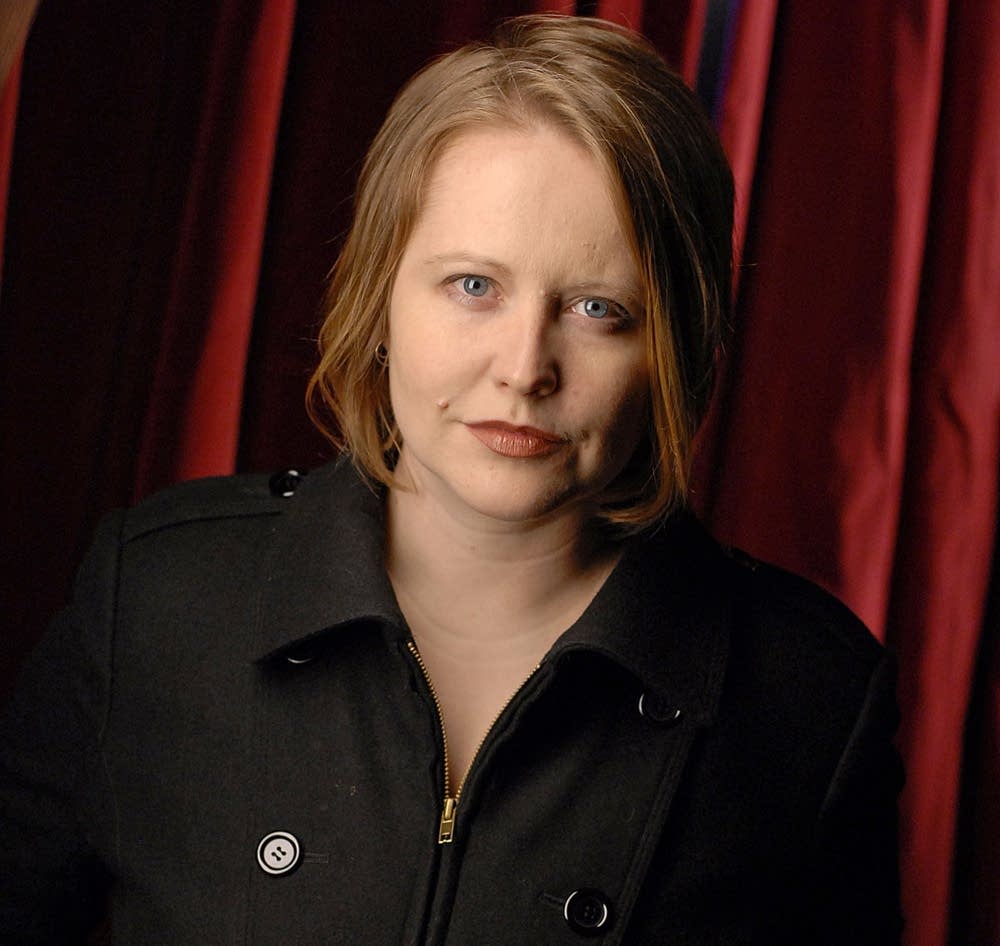
Dawn Mikkelson of Stillwater, Minn., is an award-winning independent documentary filmmaker and teacher whose company, Emergence Pictures, produces documentaries for nonprofit, governmental and sustainable business clients.
Beautifully written commentary. It touched my heart. We were at that amazing ordination. We had not long before learned that our youngest son was gay. We had felt the church's rejection of him when a Lutheran pastor told us our son should "change" or he would live a life of darkness and sin. To be present as Rev. Anita Hill was ordained gave us the gift of hope that one day families like ours would not hear messages like that from a Lutheran pastor. May the Lutherans move to a place of understanding and grace this week. May they truly open their doors and pulpits to all - sending the message that God loves and affirms his gay children.
Thank you for your wonderful commentary, Dawn.
Among too many Christians, especially those of a more socially conservative bent, there seems to be this sheepish adherence to a double standard for Gay and Straight people. If you're Straight, it's all so wonderful to be able to find a compatible person of the opposite sex, court and get engaged and marry and live happily ever after. But if you're Gay, all of that is completely out of the question. Don't even bother trying to find a compatible person. Lesbians are Gay men are precluded from any hope for romance or commitment. Gay people are simply told: "Gosh, sorry about that. You make us uncomfortable; acknowledging your existence means we might have to revise what we've been teaching all these years - meaning, Whoops! No infallible Magisterium or 'literal' Bible ... so you'll just have to sacrifice your life and any hope of finding somebody to love. Tough luck, kid. God said it, I don't necessarily understand it, but there it is."
I wish more Christians would at least TRY to wrap their minds around why this makes so little sense to Gay people.
This is a wonderful piece and the news of the ELCA Council recommendation is very welcome to us in the Episcopal Church since we are in communion with your church. We already have the right to ordain deacons and priests who are gay and our annual convention is developing language for ceremonies to bless same sex unions. There are many other churches farther along than Episcopalians or Lutherans, however, and I agree that it is so hope affirming to see mainstream, traditional organized religions taking a public stand for justice.
Jump in! The water's fine. The church won't crumble, and God's love will become better known.
--from an Episcopal priest
Thank you for your beautifully written piece about why this issue is important in the ELCA. Your words brought tears to my eyes! Thank you.
Your article gently and respectfully reflects the pain of rejection and the hope of acceptance. I can relate to your comment on how your church "erred on the side of rigid doctrine instead of focusing on grace and love." Having grown up in a similiar environment, I spent my energy making myself "acceptable" to God and others by my "goodness." The increasing hollowness I felt came to a head in college when a close friend experienced a nervous break-down from this very thing. Only then was I brave enough to "err" in my wondering of who God really is. A pastor I respect said, "Whether you are on the right side of the line or the left side of the line, you are off the line." My goal was to aim for the line. I stopped leaning on anyone's ideal of Him, including my own. I started reading the Bible with an openess to see what God said about Himself. In the last 15 years of my relationship with God, what I have come to love about Him is that He fills my empty spots, He is eternally committed, and the more time I spend with Him the more I find myself becoming like Him. How amazing to love and be loved by God, as He really is.
Here is a great truth about God's love from Romans 5: 7, 8 (ESV): "For one will scarcely die for a righteous person -- though perhaps for a good person one would dare even to die -- but God shows his love for us in that while we were yet sinners, Christ died for us." So that He and I can have The Relationship of an Eternity.
The article and the comments express clearly what people ache for when they don't find it: "a God who loves us for who we are." Surely, God's love is far more amazing and extensive than any of us will ever know this side of heaven. Certainly the church will want every one of us to know the full extent of God's love.
At the same time, we should remember that God showed us what love is when He offered His Son Jesus to die - to forgive our sin. Does this not mean that He loves us for who we are, but doesn't accept us as we are? He judges sin and forgives it. And, as with the woman caught in adultery, He says, "Go and sin no more." How can a church take seriously God's anger toward what the Bible calls sin while at the same time letting sinners know that they are sinners? The article and the comments seem to indicate that God's love is only real if He doesn't decide something about us is sinful and His Church doesn't call us to change.
Please be civil, brief and relevant.
E-mail addresses are never displayed but they are required to confirm your comments. All comments are moderated. MPR reserves the right to edit any comments on this site and to read them on the air with attribution. Please read the Comment Guidelines before posting.
You must be 13 or over to submit information to Minnesota Public Radio. The information entered into this form will not be used to send unsolicited e-mail and will not be sold to a third party. For more information see Terms and Conditions and Privacy Policy.