Raising sheep a family affair on one farm

It's the single biggest day of the year at Julie Mackenzie's barn in Sauk Centre in central Minnesota. Mackenzie and her family own a small flock of purebred Rambouillet sheep.
Today is shearing day. Mackenzie and her family get to shear their Rambouillets once a year and harvest the wool.

Mackenzie sells the wool to spinners, fiber artists and knitters. So on this day, her entire family's focus should be on harvesting the fleece. Instead, her husband Andrew said something unexpected happened at the barn.
"We didn't expect shearing day would also be lambing day," he said. "This last year, one of the ram lambs, who is not supposed to be fathering children, must have gotten together with these older ewes and 142 days later, we have a lamb to show for it. We're not supposed to have lambs for another three weeks."
Create a More Connected Minnesota
MPR News is your trusted resource for the news you need. With your support, MPR News brings accessible, courageous journalism and authentic conversation to everyone - free of paywalls and barriers. Your gift makes a difference.
This surprise is also alarming because pregnant ewes have to be monitored for any potential health problems.
Mackenzie started to raise sheep eight years ago, after she and her husband sold their marketing firm. They bought a farm that sits on land Mackenzie can trace back six generations in her family. Mackenzie and her husband taught themselves how to raise sheep and befriended other shepherds who continue to mentor them. They have a guard llama, a few horses and flock of about 50 sheep.
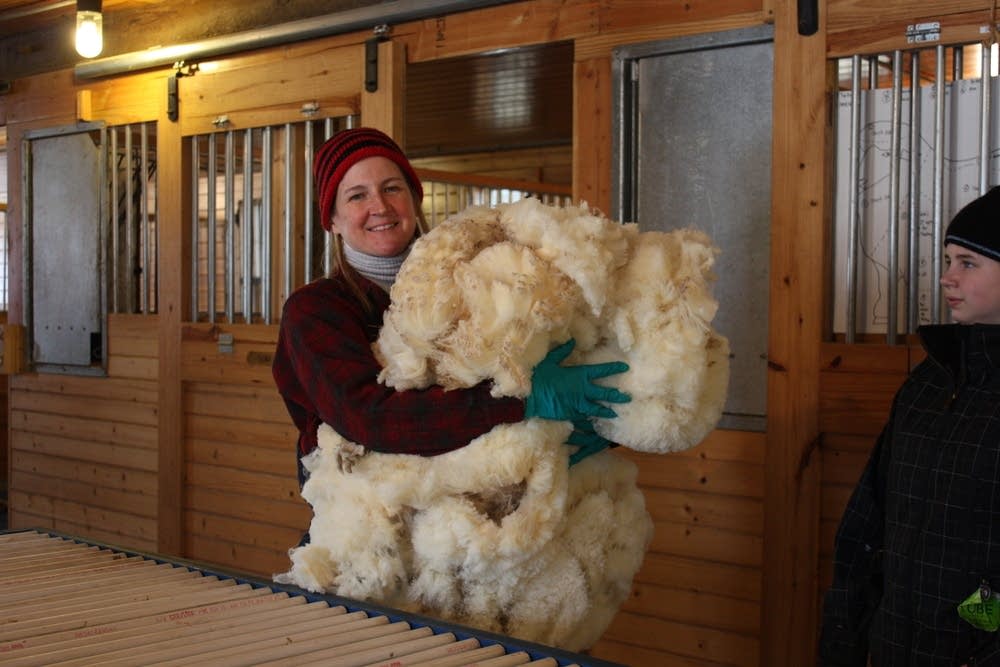
Julie Mackenzie said her mother and aunts who grew up on a farm had a certain wisdom and knowledge that stems from a farming background, and she wanted her four children to have that experience. She naturally gravitated toward sheep because she's been knitting since she was 12 years old.
"We picked sheep because I love to knit and I love wool and you have to have animals that you'll be interested in so you don't suffer the work," Mackenzie said.
Shearing day is a family experience. Her 16-year-old son and his friends strategize to get the sheep in line for shearing. And her two daughters, who spin yarn, evaluate and sort the fleece.
Julie Mackenzie said the quality of her wool depends largely on the shearer. A good one like hers will shear the fleece all in one piece.
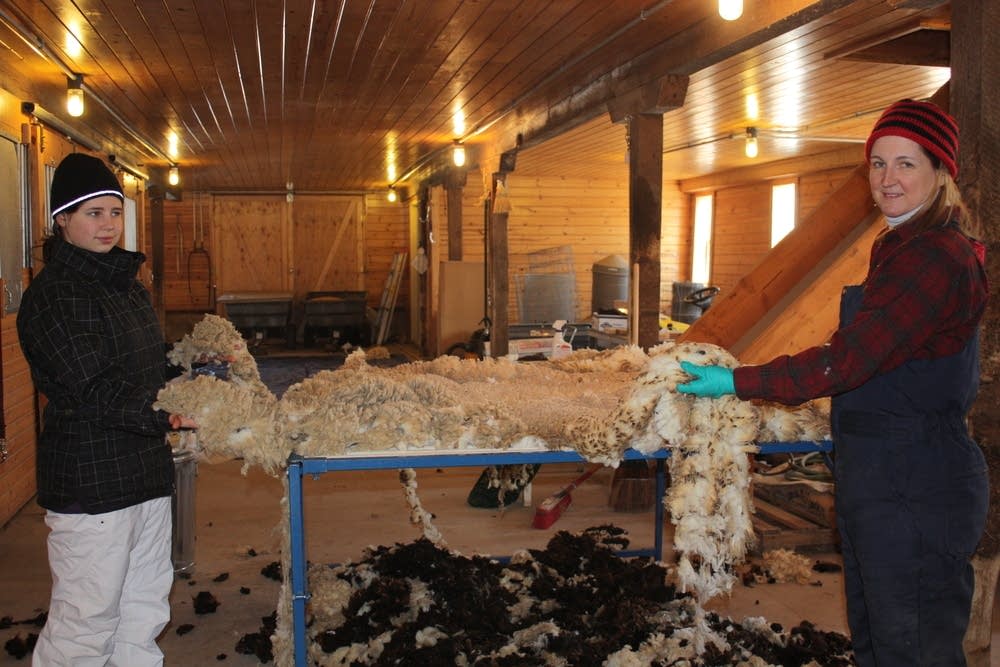
Mackenzie said her small business mostly pays for the sheep, but not the farm itself. Yet she's in the business because it's rewarding. She said she bonds with these animals especially when she helps them deliver lambs. She's found that life and death are very present in the barn. While one pregnant ewe gave birth to a lamb, another didn't dilate enough to give birth. The mother and unborn lamb didn't make it.
"You know their different personalities. You know what makes them mad, you don't want to get kicked in the head," she said. "So you're dealing with them, you're keeping them alive, you really do have a relationship with them. And so when they go, you've lost a relationship, so you do feel it."
Back at her house, near the barn, Mackenzie said as a wool producer, there's another reward to which gardeners and people in the local food movement can relate.
"It is wonderful having that sense of connection of the source," she said. "Starting with the sheep and ending up on your body. There's just a real richness in that."
This year, Mackenzie's fleece won several awards at the Shepherd's Harvest Festival in Lake Elmo. Mackenzie said this is a good time for the wool business, with more women raising sheep and a robust knitting industry.

