When bridge-building becomes art
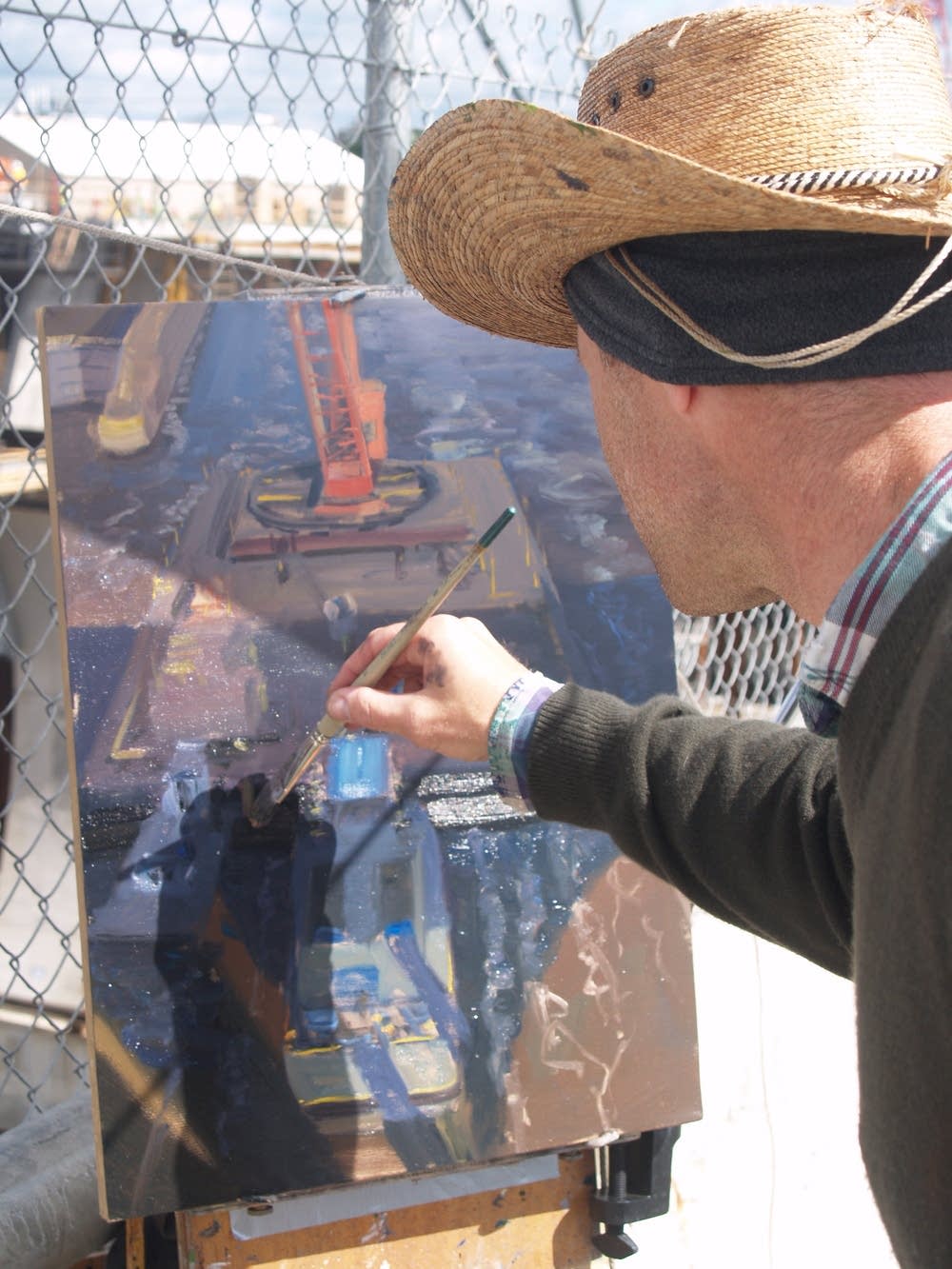
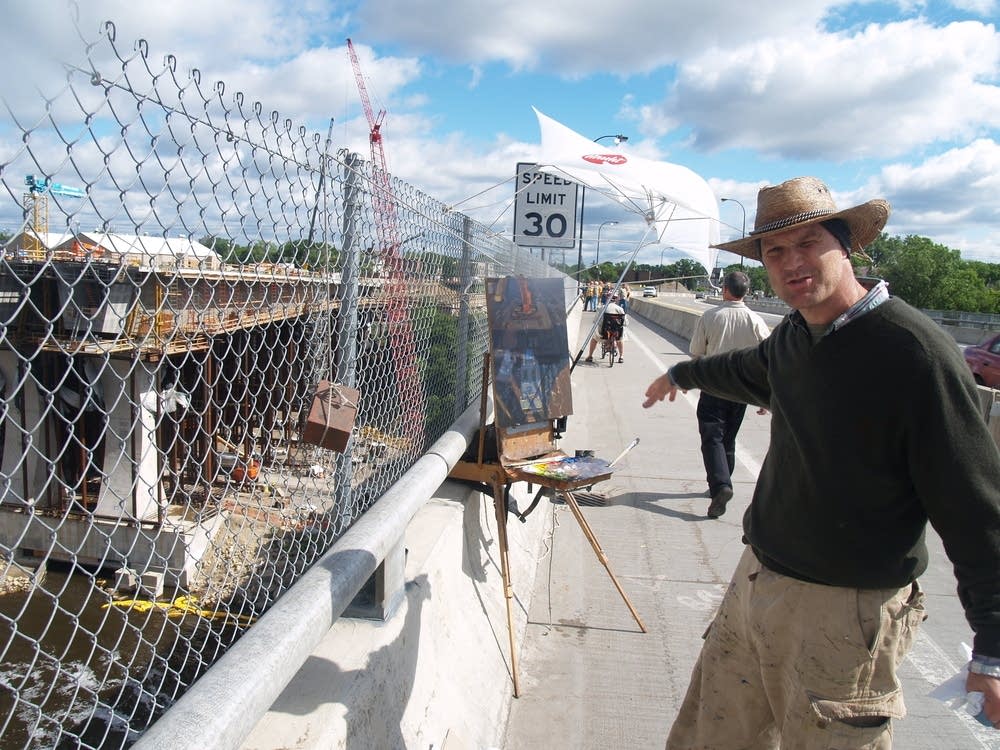
Oil painting has an air of romance to it. But Scott Lloyd Anderson quickly blows that away, almost literally. He's had to tie most of his gear to the chain link fence on the 10th Avenue bridge. It helps prevent the constant wind from whipping it across the street and into the traffic rolling by just feet away.
"As you can see I've got it tied down quite good," he said with a grin. "But even still the back of the canvas beats like a drum, and it's pretty hard to paint a straight line when the wind - a 25 mile an hour wind - is pushing you and your surface is flexing in and out," Anderson said.
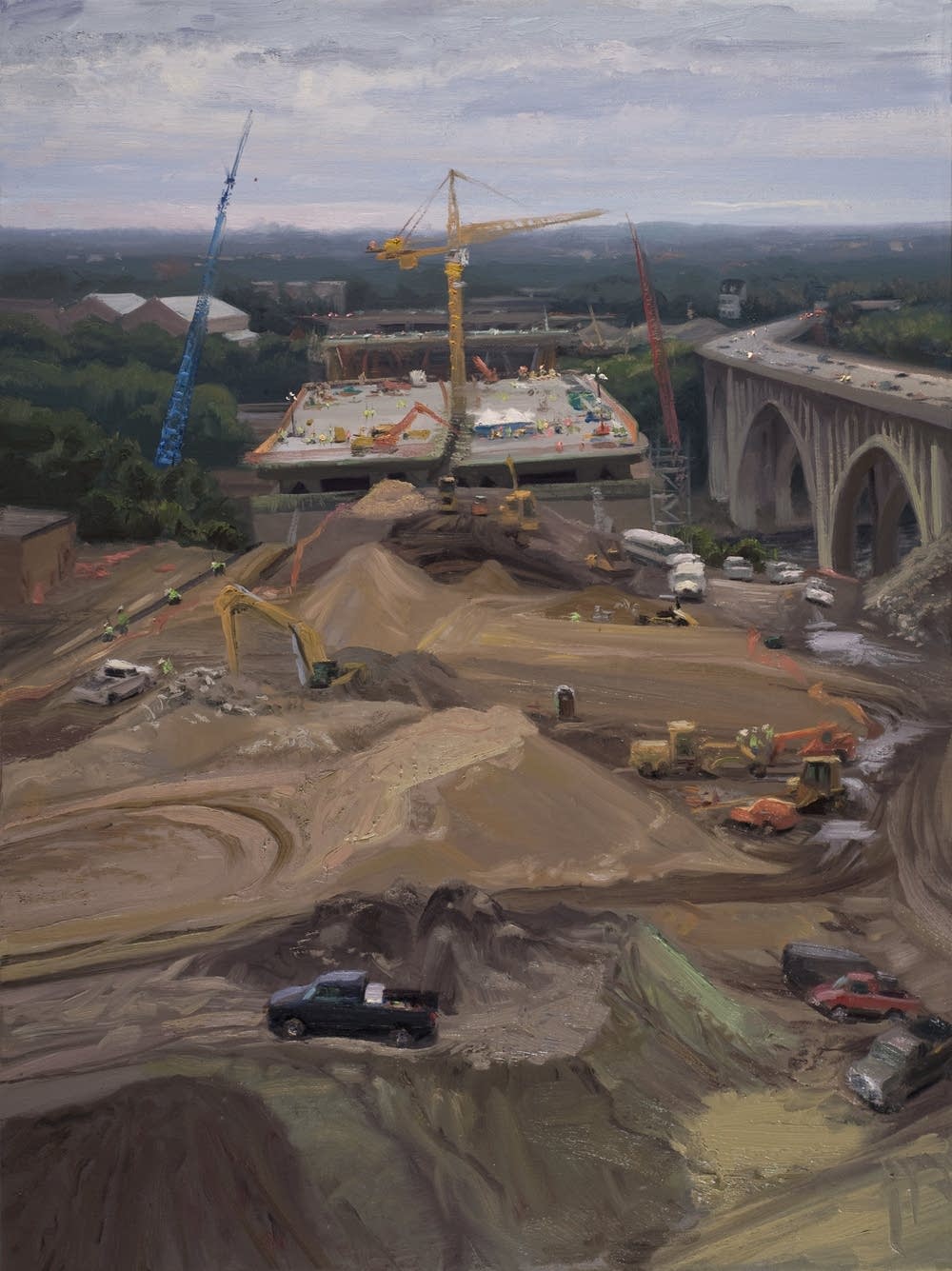
Anderson practices "plein air" painting - a style of outdoor painting done very quickly to capture a specific moment.
"The light is transient," he said. "I usually try to finish a painting at one time, alla prima, rarely can I go back to a painting on a different day; the light is always different."
Create a More Connected Minnesota
MPR News is your trusted resource for the news you need. With your support, MPR News brings accessible, courageous journalism and authentic conversation to everyone - free of paywalls and barriers. Your gift makes a difference.
Anderson says the canvases usually take him three to four hours.
Anderson says for all it's tragedy, the I-35W bridge collapse has provided an opportunity. He says the view from the 10th Avenue Bridge up the river to downtown Minneapolis, once blocked by the highway, is now clear.
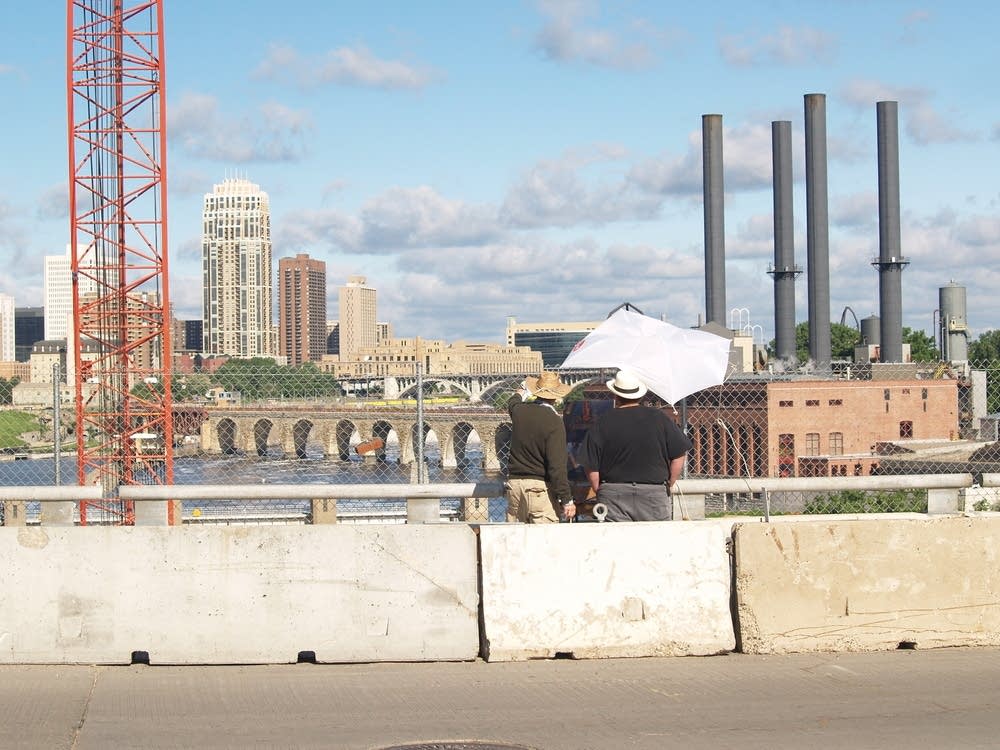
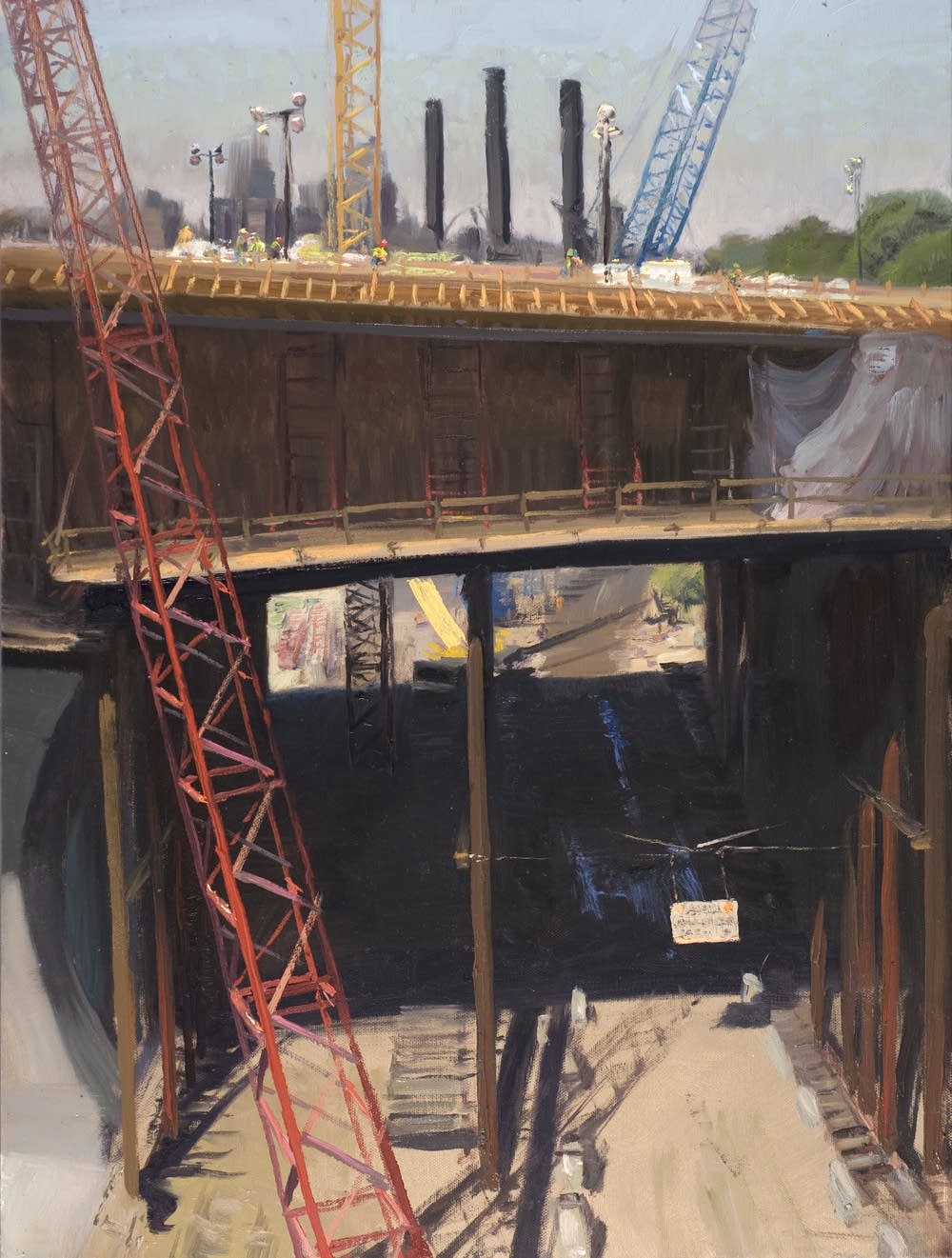
This is what he wants to paint. He also wants to capture the construction, the teamwork it needs and the sheer massive forms coming together to create a new crossing.
"Today I am painting the barge that's in the middle of the river that has this immense crane, the largest crane on the Mississippi River from what I hear, it's called Big Ben," he said standing at his easel. "It's a big red crane, and it does the lions share of the work hoisting the individual sections, or flying them, the workers call it, they will fly the sections up to position where they will be cantilevered over the span."
Over the last few weeks Anderson has painted sections being cast, trucks moving dirt for the entrance ramp, and the cranes against the downtown skyline. He's painted some of the workers too.
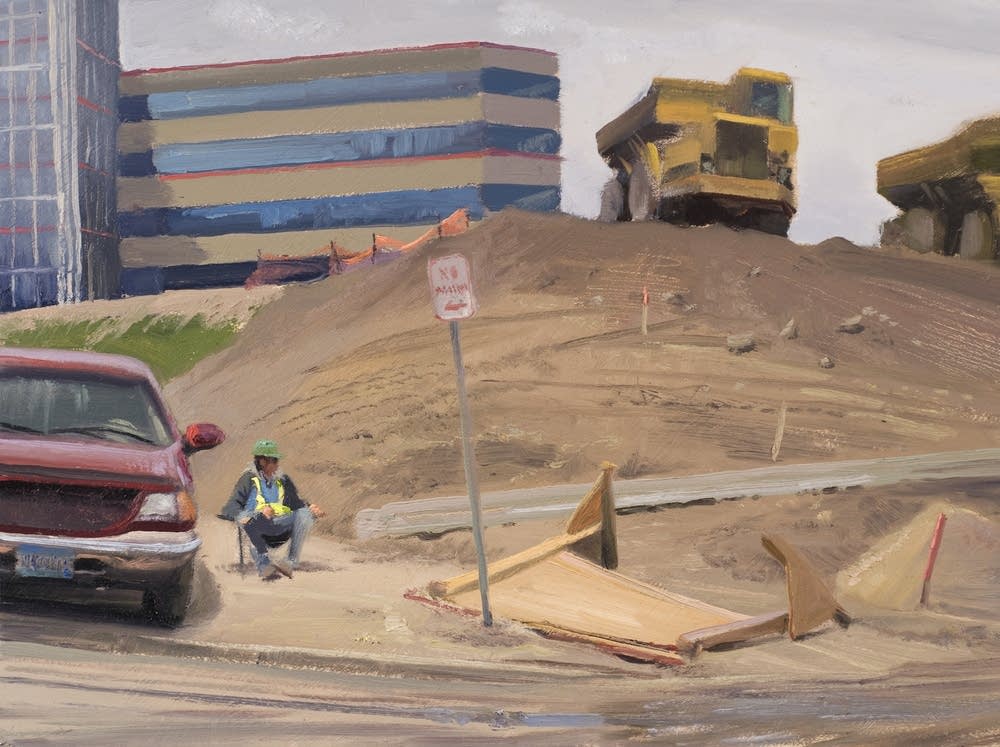
"You know, trying to get onto the site, I befriended the security guy who was guarding the entrance," Anderson smiled. "And I said 'If you aren't going to let me in, you are going to have to sit for a coiuple of hours and let me paint you.'" With just a few brush strokes, Anderson captures the contrasts. Flourescent safety vests and primary colored equipment stand out from the olives and browns of the dirt and the river. As he paints Anderson immerses himself in his subject.
"Minneapolis is my city, and this bridge's construction is our time," he said.
Of course there's a little back story here. Anderson's remarkable skills with a brush didn't bloom overnight.
He was the art director for the Twin Cities Reader years ago, then moved on to Corporate Report, and later did a music magazine for Sam Goody and Musicland stores.
He wanted to set that all aside though, so now he does this, painting and talking with the people who come by. Most people are complimentary, but not everyone.
"Like this morning, a couple of knuckleheads driving by, yelling out the window, 'Hey Picasso, go get a job!' I wanted to yell back 'I got a job. Go sit in your cubicle and foreclose on somebody, pal?'," said Anderson.
Anderson admits he has strong views on some things, including what may have led up to the bridge collapse. He wants to keep them to himself for the moment, although he will allow that some of his frustrations do end up on the canvas.
He says it's been tough standing out in the wind, and the noise and the dust, struggling to capture the moment.
"It's hard. And oftentimes I don't really even, I don't like painting. But in the end I like having painted."
Scott Anderson is developing quite a collection of bridge construction paintings. He's like to show them, preferably before the bridge construction is completed. He hasn't found a space yet, but he says, if push comes to shove, he may just mount them all in a big van, and park it nearby.


