Play5min 07sec‘It’s such a surreal feeling’: Alissa Pili talks about her future with the Minnesota LynxThis week the Minnesota Lynx put more firepower into their roster in the 2024 WNBA Draft by drafting University of Utah forward Alissa Pili.
‘Minnesota Voting Rights Act’ nears governor’s signature after state Senate approvalThe bill would cement in law protections previously guaranteed under the federal Voting Rights Act, including the ability to legally challenge vote suppression and other forms of potential discrimination.
Rep. Ilhan Omar’s daughter suspended over pro-Palestinian protest at ColumbiaSeveral students involved in the protest said they were also suspended from Columbia and Barnard College, including Isra Hirsi, who is the daughter of U.S. Rep. Ilhan Omar, a Minnesota Democrat.
Play3min 41secKings of chaos: A review of a marathon of Shakespeare at the GuthrieThe Guthrie Theater stages a compelling series of Shakespeare’s historical plays, using a turntable set to dynamically explore the turbulent reigns of three English kings across generations.
Play3min 56secStudent mental health needs, ‘unsustainable’ jobs overwhelm Minnesota school principalsA November statewide survey of Minnesota K-12 school principals found school leaders struggling for traction on instructional leadership and community engagement as they deal with their single greatest challenge, student mental health.
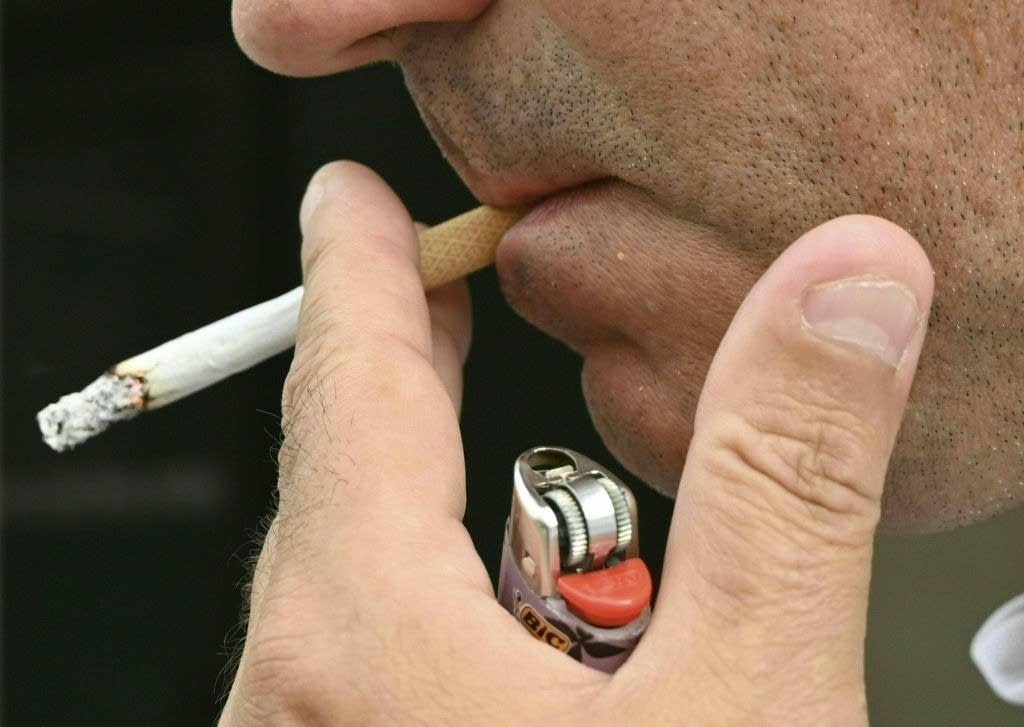
Minneapolis City Council weighs new tobacco rules, including $15 minimum price for cigarettesThe Minneapolis City Council is considering adding new rules and restrictions on sales of tobacco products, including a minimum price for cigarettes and other products that could be the highest in the nation.
Vice President Harris returning to Wisconsin for third visit this yearVice President Kamala Harris plans to return to Wisconsin next week for her third visit to the battleground state this year.
St. Paul iron foundry faces deadline to fix pollutionThe Minnesota Pollution Control Agency says recent emission records from Northern Iron and Machine Foundry in the Payne-Phalen neighborhood indicate excessive pollution. Regulators say it is “highly likely” that the foundry is emitting levels of lead and particulate matter over federal air quality standards.
First lady Jill Biden to visit Minnesota on FridayFirst lady Jill Biden will make a brief visit to Minnesota on Friday evening.
Play4min 01secArt Hounds: A family struggles with the death of a patriarchAn Opera Theatre stages “The Cradle Will Rock,” Full Circle Theater stages “They Wear Teal Ribbons Around Their Tongues” and the Guild of Middle Eastern Dance performs its Spring Spectacular.
Judge in Trump case orders media not to report where potential jurors workThe judge in Donald Trump’s hush money trial ordered the media on Thursday not to report on where potential jurors have worked and to be careful about revealing information about those who will sit in judgment of the former president.
Play3min 56secExpert: large scale PFAS removal will take ingenuity, deep pocketsUniversity of Minnesota Environmental Health Sciences Professor Matt Simcik and All Things Considered Host Tom Crann, discussed the new federal limits on PFAS chemicals in drinking water.
Town closes on $17M deal to secure ferry service to Madeline IslandThe purchase is a “critical part of keeping the island population sustainable,” says La Pointe town chair.
Play4min 45secAs hurricanes get more powerful, some scientists suggest a new category sixThat’s out of a recent study in the journal Proceedings of the National Academy of Sciences looking at the link between stronger hurricanes and climate change.
Light pole installation hits fiber line, knocks out 911 service in several statesIt affected services for emergency agencies in Nebraska, Nevada and South Dakota. Federal officials were looking into the outage.
The search for an impartial jury in Trump’s hush money case resumesJury selection continues in the trial focused on the former president. Trump is present in the courtroom while New Yorkers answer personal questions about their ability to serve on the jury.
Marc-Andre Fleury signs a $2.5M extension with the Wild to return for next season at age 40The Minnesota Wild signed goalie Marc-Andre Fleury to a one-year, $2.5 million contract extension to bring back the veteran for his age-40 season.
Cedric Mullins hits 2-run homer in bottom of the 9th to give Orioles 4-2 win over TwinsCedric Mullins hit a two-run homer in the bottom of the ninth inning to give the Baltimore Orioles a 4-2 victory over Minnesota and a three-game sweep of the Twins.
States botched more executions of Black prisoners. Experts think they know why A study showed states made more mistakes when executing Black prisoners by lethal injection than they did with prisoners of other races. Execution workers and race experts said they're not surprised.
Wildfire smoke contributes to thousands of deaths each year in the U.S. Two new studies show the unseen toll smoke is taking on people across the country. Climate change is likely to make the problem even bigger.